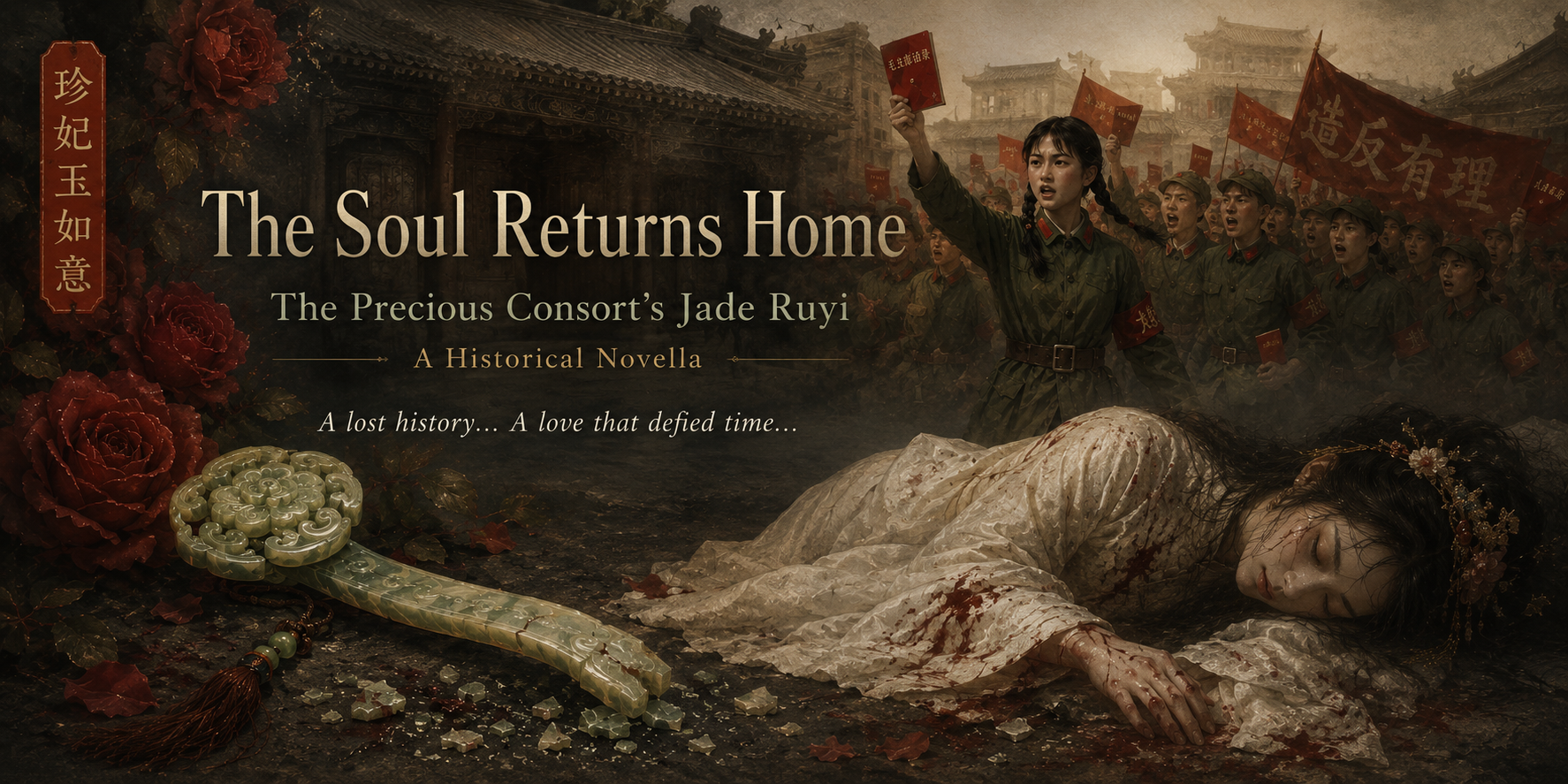
一九六六年,北京夏季,炎炎烈日, 酷熱難熬,歷史悠久的文化古城, 空氣燥熱難忍。
而比天氣更加燥熱的, 是滿城正在上演的政治鬧劇。紅旗飄飄,戰鼓隆隆,【造反有理】、【敵人不投降, 就叫他滅亡】 口號聲,回蕩在整個城市大街小巷。
被毛澤東接見, 激起滔天革命激情,紅衛兵革命小將, 身穿綠軍裝, 腰裡紮銅頭皮帶, 胳膊上紅衛兵袖章, 格外引人注目。
他們滿城到處亂闖,睜大眼睛, 全城搜尋,任何殘存的封資修痕跡。
在街頭, 他們剪開人們的闊腿褲, 剁掉人們皮鞋上的尖頭 , 砸爛商店裡, 乾隆, 啟功, 郭沫若等歷史名人書寫,高高懸掛的牌匾。
可是, 僅僅這些, 已經不能滿足,他們無法充分發洩的革命激情。
革命要繼續, 革命要深入,他們要用實際行動, 表明對偉大領袖的愛, 不惜用生命, 捍衛他的,無產階級文化大革命,革命路線。
把革命再深入一步, 就不僅要從思想上, 把一切封、資、修的東西, 批倒批臭, 而且,要把一切封建餘孽,趕出北京, 甚至要在肉體上,把他們消滅乾淨 。一九六六年,北京夏季,炎炎烈日, 酷熱難熬,歷史悠久的文化古城, 空氣燥熱難忍。
而比天氣更加燥熱的, 是滿城正在上演的政治鬧劇。紅旗飄飄,戰鼓隆隆,【造反有理】、【敵人不投降, 就叫他滅亡】 口號聲,回蕩在整個城市大街小巷。
被毛澤東接見, 激起滔天革命激情,紅衛兵革命小將, 身穿綠軍裝, 腰裡紮銅頭皮帶, 胳膊上紅衛兵袖章, 格外引人注目。
他們滿城到處亂闖,睜大眼睛, 全城搜尋,任何殘存的封資修痕跡。
在街頭, 他們剪開人們的闊腿褲, 剁掉人們皮鞋上的尖頭 , 砸爛商店裡, 乾隆, 啟功, 郭沫若等歷史名人書寫,高高懸掛的牌匾。
可是, 僅僅這些, 已經不能滿足,他們無法充分發洩的革命激情。
革命要繼續, 革命要深入,他們要用實際行動, 表明對偉大領袖的愛, 不惜用生命, 捍衛他的,無產階級文化大革命,革命路線。
把革命再深入一步, 就不僅要從思想上, 把一切封、資、修的東西, 批倒批臭, 而且,要把一切封建餘孽,趕出北京, 甚至要在肉體上,把他們消滅乾淨 。
偉大領袖居住的北京城, 怎麼可以讓那些封建遺老遺少存在? 北京, 是革命聖城, 應該是水晶般透明,只有無產階級,才可以居住的革命聖地。
天氣, 是火熱的, 革命激情,是奮發高揚的, 革命小將的行動, 是瘋狂的 。
人命, 已經一文不值, 法律, 已經不復存在。紅衛兵, 有天大的權力,根據自己判斷, 就可以決定一個人的生死, 就可以,直接判一個人死刑, 而且立即執行。
他們腰中, 扎著的銅頭皮帶, 就是執法工具, 簡單,迅速, 方便, 效率。
法律已經無人尊重, 秩序已經全然改變, 不受任何法律約束的紅衛兵們, 正以他們的瘋狂, 書寫著共和國歷史上, 混亂,暴虐,而又最荒唐的篇章。
文化大革命,正以全力,改寫這座古老城市的過去, 現在,和將來。
東城區,東總部胡同,一個隱蔽的小院落,平時總是大門緊閉, 房子的主人幾乎從不公開露面。
它的神秘, 就如同藏在這座古老城市中, 其它許多院落一樣 , 沒有人知曉。如果不是文化大革命, 這些秘密,可能永遠不會被揭穿。
北京, 謎一樣的古城, 歷代王朝六百多年,埋下了,隱藏著太多的秘密。 太多的秘密,就藏在那一座座不起眼,小小的四合院中,這,就是北京。
可是今天, 情況不一樣了, 紅衛兵小將, 沒有任何忌諱, 沒有任何條條框框, 他們天不怕, 地不怕, 天王老子,他們也敢拉下馬, 封、 資、 修、牛鬼蛇神,就更不在話下。
紅衛兵們,列隊闖進這個安靜的小院。
院子不大,裡面種滿了盛開的紅色玫瑰花, 只要你接近這個院子, 就可感受玫瑰花的襲人香氣。
在這個城市的喧囂中, 這是一片靜謐之地, 一片淨土,一個真正的世外桃源。
但是今天, 就在今天, 這片靜謐被打破, 這個世外桃源, 被鬧得翻天地覆。不復存在, 而她的主人, 竟然直接就被送上黃泉路。
紅衛兵的隊伍,如暴風雨般,闖入這片淨土、靜土。他們臉上,寫滿了革命決心,青春狂熱。
領頭的,是個名叫林慧的女孩,年輕, 漂亮, 扎小馬尾的頭髮, 顯出她的幹練,臉上滿滿革命熱情、 激情, 和與她年齡不相符的成熟。
她身穿綠軍裝,腰間扎著一條寬寬的銅頭皮帶,
她的眼神堅定有力,口中喊著“打倒封建餘孽”口號, 砸開了小院平常緊閉的大門, 紅衛兵一擁而入。
她, 和他們,她們,深信自己正在參與的, 正在做的,是一場史無前例, 並且一定會被後人, 寫進歷史的革命行動。
為此, 他們願意,付出青春,為了領袖的理想,他們可以犧牲一切,包括自己的生命。
破門而入的紅衛兵小將,二話不說, 一腳踹開中間房屋大門, 把一個老女人,從裡面拖出來。
這個女人,一身飄逸白色絲綢長袍,白衣、白褲, 瘦的如紙片般, 飄飄然;
雖然已入暮年,但姿態仍然優雅,不失貴族氣質的臉龐,依然可窺見她的昔日風華。
她長至腰際的披肩白髮, 銀絲一般飄落,眼神略帶一分驚恐,卻難掩九分的堅定和尊嚴。
這個婦人的模樣, 讓不少紅衛兵感到恐懼, 好像是看到鬼, 有人大喊: “ 鬼呀 !?!” 就向門外跑。
“ 胡說 , 哪裡有鬼 ? ”
林慧一聲怒喝, 制止了向外跑的紅衛兵。
“大家看看, 這就是隱藏在我們革命首都的封資修黑貨, 典型的封建餘孽。 階級鬥爭就在我們身邊!這不就是很好的證明嗎,”
林慧厲聲說道;
“ 打倒封建餘孽,”
“ 毛主席萬歲, ”
紅衛兵,在林慧的帶領下, 喊起了口號;
“封建餘孽!你這個滿清遺老,還敢在這裡藏匿!”
林慧的聲音洪亮,回蕩在整個院子裡。
隨著她的命令,紅衛兵們開始進屋,翻找著房間內每一個角落。
一大堆看似珍貴的古董和書籍被扔到院子中央。火堆很快被點燃,熊熊大火吞噬著這些被視為“四舊” 的歷史文物,古玩珍寶。
“ 妳叫什麼名字?” 林慧厲聲問道。
“ 他他那拉氏 ” ,老婦人堅定地說出自己的姓,聲音中充滿了不屈。
“ 什麼他他那拉氏, 胡說八道, 她不老實!” 一個紅衛兵站出來揭發她。
“ 我媽媽在街道工作,知道她的真實身份,她就是過去用勞動人民血汗養活的,滿清光緒皇帝的寵妃, 珍妃!”
” 我就是他他那拉氏, 我沒有不老實,“ 那個婦人努力辯解,解釋。
聽揭發的小將們, 怒火立即被點燃,這個封建餘孽, 居然還敢頂嘴, 還敢解釋。
林慧, 更是怒火中燒,一腳就把老婦人踹倒在地, 蜂擁而上的紅衛兵, 解下腰間皮帶, 雨點般向老人抽去。
她的白衣很快就被鮮血染紅,慘烈的畫面色彩,有如院中盛開的紅玫瑰。一代名媛,頃刻命歸西天。
等接到報信的派出所所長譚宇熙趕到, 倒在血泊中的珍妃, 已經死去多時。
已過了九十歲大壽的珍妃, 躲過了一九零零年慈禧太后的殘害, 大難不死, 逃亡國外避難, 九死一生, 歷經磨難。 只因難熬思鄉情, 秘密潛回北京隱居,頤養天年,
誰曾想到, 公元一九六六年的今天, 已經九十歲高齡的她, 九死一生, 逃過無數劫難, 卻在紅衛兵的銅頭皮帶下,變成一具冰冷屍體,她的魂魄輕輕扶搖直上青天, 去尋找她的真愛, 光緒皇帝,⋯⋯
而她珍藏的光緒皇帝賜給她的, 清宮鎮宮之寶, 那柄珍貴的翡翠玉如意, 也被紅衛兵抄出來, 毫不吝惜地, 在院子的青磚地上摔得粉碎,
嗚呼! 何其慘兮, 何其哀哉, 。。。。。。
( 未完待續 )It was the summer of 1966 in Beijing.
Under a blazing sun, the ancient cultural capital sweltered beneath an unbearable heat. The air itself seemed heavy enough to suffocate.
Yet hotter still than the weather was the political frenzy engulfing the entire city. Red flags fluttered everywhere. War drums thundered. Slogans such as "To Rebel Is Justified!" and "If the enemy refuses to surrender, destroy him!" echoed through every street and alley of Beijing.
Having been personally received by Mao Zedong and swept away by revolutionary fervor, the young Red Guards marched proudly through the city. Dressed in olive-green military uniforms, broad brass-buckled belts fastened around their waists, and red armbands wrapped around their sleeves, they were impossible to overlook.
They roamed the streets in every direction, eyes wide open, searching every corner of the city for anything that still bore the slightest trace of what they condemned as feudalism, capitalism, or revisionism.
On the streets they cut open people's wide-legged trousers, chopped the pointed toes from leather shoes, and smashed the shop signs bearing the calligraphy of famous historical figures such as the Qianlong Emperor, Qi Gong, and Guo Moruo.
But even that was no longer enough to satisfy the revolutionary passion raging inside them.It was the summer of 1966 in Beijing.
Under a blazing sun, the ancient cultural capital sweltered beneath an unbearable heat. The air itself seemed heavy enough to suffocate.
Yet hotter still than the weather was the political frenzy engulfing the entire city. Red flags fluttered everywhere. War drums thundered. Slogans such as "To Rebel Is Justified!" and "If the enemy refuses to surrender, destroy him!" echoed through every street and alley of Beijing.
Having been personally received by Mao Zedong and swept away by revolutionary fervor, the young Red Guards marched proudly through the city. Dressed in olive-green military uniforms, broad brass-buckled belts fastened around their waists, and red armbands wrapped around their sleeves, they were impossible to overlook.
They roamed the streets in every direction, eyes wide open, searching every corner of the city for anything that still bore the slightest trace of what they condemned as feudalism, capitalism, or revisionism.
On the streets they cut open people's wide-legged trousers, chopped the pointed toes from leather shoes, and smashed the shop signs bearing the calligraphy of famous historical figures such as the Qianlong Emperor, Qi Gong, and Guo Moruo.
But even that was no longer enough to satisfy the revolutionary passion raging inside them.
The revolution had to continue.
The revolution had to go deeper.
Through action they would prove their devotion to the Great Leader. They were willing to stake even their own lives to defend his Great Proletarian Cultural Revolution and its revolutionary line.
To carry the revolution one step further meant more than denouncing everything associated with feudalism, capitalism, and revisionism. It meant driving every remnant of the old feudal order out of Beijing—and, if necessary, wiping them out physically.
How could the capital where the Great Leader lived be allowed to shelter relics of the old dynasty? Beijing was the sacred city of the revolution, a place that should be as pure and transparent as crystal, a revolutionary sanctuary where only the proletariat deserved to live.
The weather burned with heat.
Revolutionary passion burned even hotter.
And the actions of the young Red Guards burned with madness.
Human life had become worthless.
Law had ceased to exist.
The Red Guards possessed absolute power. By their own judgment alone, they could decide whether a person lived or died. They could pronounce a death sentence on the spot—and carry it out immediately.
The brass-buckled belts fastened around their waists became instruments of justice as they understood it: simple, swift, convenient, and brutally efficient.
No one respected the law any longer.
The old order had completely collapsed.
Freed from every legal restraint, the Red Guards were writing, through their own frenzy, one of the most chaotic, violent, and absurd chapters in the history of the People's Republic.
The Cultural Revolution was remaking this ancient city with overwhelming force—rewriting its past, reshaping its present, and deciding its future.
In Dongzongbu Alley, in Beijing's Dongcheng District, stood a secluded courtyard hidden from public view. Its gate remained closed almost all the time, and the owner of the house rarely appeared in public.
Its secrecy was no different from that of countless other courtyards concealed throughout this ancient city. No one knew what lay behind its walls. Had the Cultural Revolution never come, its secret might have remained buried forever.
Beijing was a city of mysteries.
For more than six centuries of imperial rule, countless secrets had been hidden beneath its roofs and behind its walls. So many of them lay concealed within those small, unremarkable siheyuan courtyards.
That was Beijing.
But today everything was different.
The young Red Guards had no taboos, no restraints, no limits. They feared neither Heaven nor Earth. They would even dare drag the highest authority from his throne. As for feudalists, capitalists, revisionists, and every so-called "monster and demon," they were hardly worth mentioning.
The Red Guards marched into the quiet courtyard in formation.
The courtyard itself was small, but it overflowed with blooming red roses. Anyone who came near could immediately breathe in their rich fragrance.
Amid the noise and turmoil of the city, this was a place of rare tranquility—a peaceful refuge, a true earthly paradise.
But today, on this very day, that peace was shattered.
This little paradise was turned upside down and destroyed.
Its mistress herself was about to be sent on the road to the underworld.
Like a violent storm, the Red Guards surged into this peaceful sanctuary. Their faces blazed with revolutionary determination and the fierce excitement of youth.
Leading them was a young woman named Lin Hui. She was young and attractive. Her hair, tied neatly into a short ponytail, gave her an air of efficiency beyond her years. Her face overflowed with revolutionary zeal, yet there was also a maturity that seemed strangely out of place for someone so young.
She wore a green military uniform, with a broad brass-buckled belt fastened tightly around her waist.
Her eyes were hard and resolute. Shouting, "Down with the remnants of feudalism!", she smashed open the tightly closed gate of the courtyard. The Red Guards poured inside behind her.
She,and the young men and women who followed her,believed with absolute conviction that they were taking part in an unprecedented revolution, one that would surely be written into history by future generations.
For that cause, they were willing to dedicate their youth. For the ideals of their Great Leader, they believed they could sacrifice everything—even their own lives.
Without a word, the Red Guards kicked open the door of the main house and dragged an elderly woman outside.
She wore a flowing white silk robe, with white garments beneath it. Her body was so thin that she seemed almost weightless, as though a passing breeze might carry her away.
Though already in the twilight of life, she still carried herself with remarkable grace. The noble bearing upon her face revealed traces of the extraordinary beauty she had once possessed.
Her long white hair fell to her waist like strands of silver. A hint of alarm flickered in her eyes, yet it could not conceal the quiet dignity and unwavering resolve that still shone within them.
The sight of the old woman startled several of the young Red Guards.
For an instant, she seemed less like a living person than a ghost from another age.
"Ghost! A ghost!" someone suddenly screamed, turning to run toward the gate.
"Nonsense! Where's the ghost?"
Lin Hui's sharp voice rang out, stopping the fleeing Red Guard in his tracks.
"Take a good look!" she shouted. "This is one of the hidden enemies concealed in the capital of our revolution—a genuine remnant of feudalism! Class struggle is happening right beside us! Isn't this proof enough?"
Her voice echoed across the courtyard.
"Down with the remnants of feudalism!"
"Long live Chairman Mao!"
Led by Lin Hui, the Red Guards burst into loud revolutionary slogans.
"You feudal leftover!" Lin Hui shouted at the old woman. "You relic of the Qing dynasty! You still dare hide here!"
Her powerful voice reverberated throughout the courtyard.
At her command, the Red Guards rushed into the house and began searching every room, overturning every corner.
Soon they dragged out piles of objects that appeared to be valuable antiques and books, throwing everything into the middle of the courtyard. A bonfire was quickly lit, and the flames eagerly consumed these historical relics and precious works of art, all condemned as part of the "Four Olds."
"What is your name?" Lin Hui demanded sternly.
"Yehe Nara."
The elderly woman answered calmly, firmly pronouncing her family name. Her voice carried neither fear nor hesitation, only quiet dignity.
"Yehe Nara? Nonsense! She's lying!", one of the Red Guards immediately cried.
"My mother works for the neighborhood committee," the young man declared. "She knows who this woman really is. She is the former favorite consort of the Guangxu Emperor,the Precious Consort of the Qing Dynasty. Her whole life was paid for with the sweat and blood of working people!"
"I am Yehe Nara," the old woman replied with equal firmness. "I am telling the truth."
Her quiet attempt to explain only poured oil onto the fire.
The young Red Guards were instantly enraged.
This remnant of the old feudal order still dared to answer back.
She still dared to defend herself.
Lin Hui's fury exploded.
With a savage kick, she knocked the old woman to the ground.
The Red Guards surged forward as one. They unfastened the brass-buckled belts from around their waists and brought them down upon the frail old woman like a driving rainstorm.
Very soon, her white garments were stained crimson with blood.
The shocking colors were like the red roses blooming throughout the courtyard.
In only a few moments, a woman who had once been one of the most celebrated ladies of her age breathed her last.
By the time Police Station Chief Tan Yuxi arrived after receiving word of the attack, Consort Zhen was already lying motionless in a pool of blood.
She had been dead for some time.
Having lived beyond ninety years of age, Consort Zhen had survived Empress Dowager Cixi's attempt to kill her in 1900. She had escaped abroad, endured countless hardships, and survived dangers beyond measure. Unable to overcome her longing for her homeland, she had secretly returned to Beijing to live out the remainder of her life in quiet seclusion.
Who could possibly have imagined that, on this day in 1966, after surviving so many calamities and reaching the age of ninety, she would finally die beneath the brass-buckled belts of the Red Guards?
Her soul rose gently toward the heavens, seeking the one she had loved all her life—
Emperor Guangxu.
Meanwhile, the priceless jade ruyi that Emperor Guangxu had once bestowed upon her—the treasured imperial heirloom that had long been preserved within the Qing Palace,was discovered by the Red Guards.
Without the slightest hesitation or pity, they hurled it onto the blue brick paving stones of the courtyard.
It shattered into countless pieces.
Alas...
How tragic.
How unspeakably sorrowful...
(To be continued)