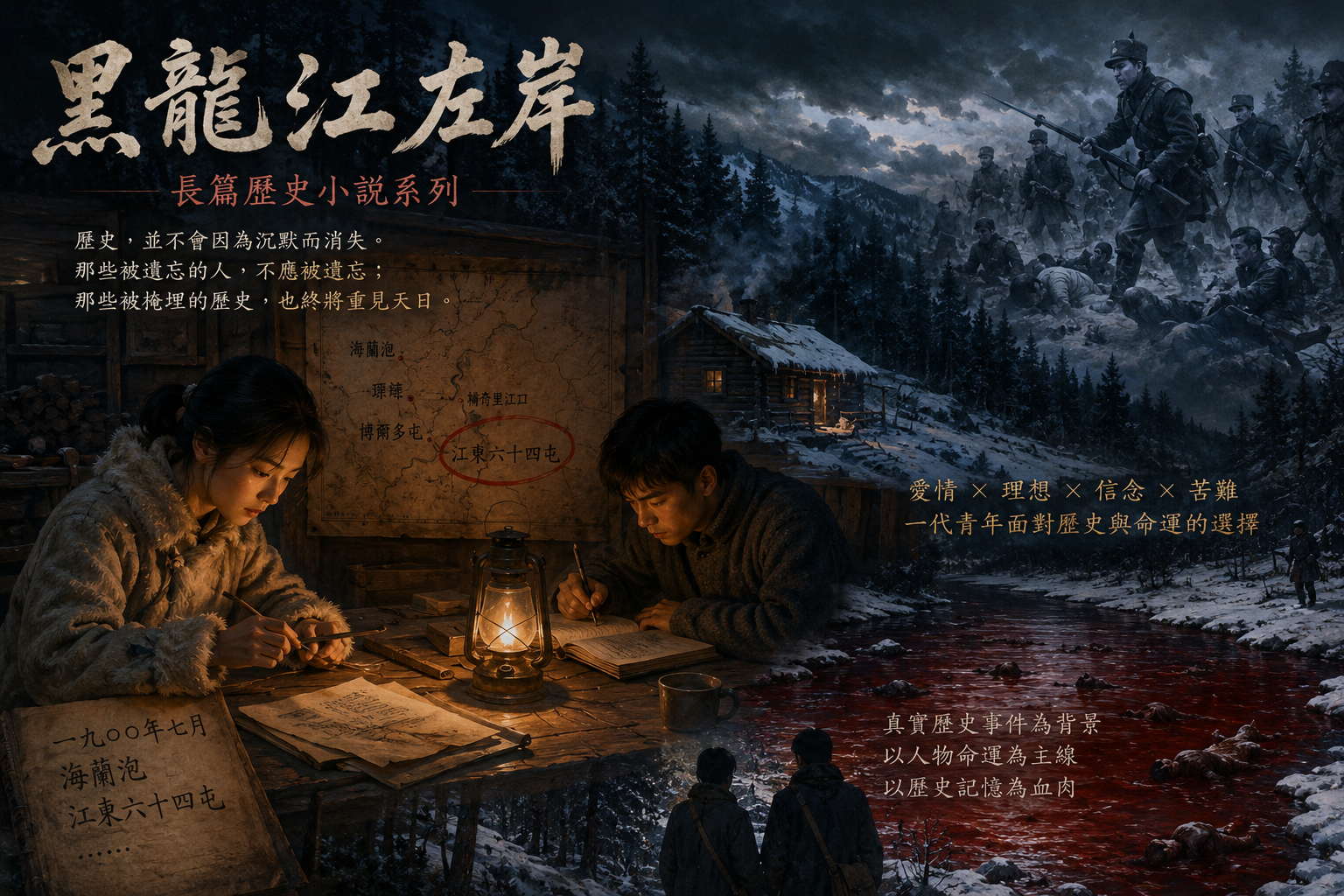
王奶奶包的酸菜狍子肉餡餃子真好吃, 青兒和盧正鋼這一段基本上是靠玉米餅子, 野菜, 胡亂裹腹。 因此這麼好吃的餃子, 王奶奶又一再勸他們多吃, 所以他們還真沒少吃, 這是他們在野外生活的近一年裡, 吃的最好的一頓飯。
飯後他們又與王奶奶聊了一會兒天, 感覺乏勁兒上來了, 就都休息了。
盧正鋼自己住西屋, 青兒和王奶奶一起住東屋。
王奶奶年紀大了, 今天和他們談話, 既傷心又費神。 然後又忙活著包餃子招待他們, 也累了。 她和青兒聊了一會天兒, 撐不住, 就先睡了。
青兒雖然也疲倦, 但是今天的談話內容實在是太刺激神經。 她聽過很多人講當年的往事, 但是像王奶奶這樣的親身經歷者,如此清晰地述說當年的血淚史, 還是她採訪中碰到的第一個。
青兒躺在熱乎的火炕上, 不僅思緒萬千。 她又一次感覺自己的選擇沒有錯, 這麼珍貴的口述歷史資料, 如果沒有人收集, 整理, 那麼這一代老人去世後, 就再沒有人知道當年的真相了。王奶奶包的酸菜狍子肉餡餃子真好吃, 青兒和盧正鋼這一段基本上是靠玉米餅子, 野菜, 胡亂裹腹。 因此這麼好吃的餃子, 王奶奶又一再勸他們多吃, 所以他們還真沒少吃, 這是他們在野外生活的近一年裡, 吃的最好的一頓飯。
飯後他們又與王奶奶聊了一會兒天, 感覺乏勁兒上來了, 就都休息了。
盧正鋼自己住西屋, 青兒和王奶奶一起住東屋。
王奶奶年紀大了, 今天和他們談話, 既傷心又費神。 然後又忙活著包餃子招待他們, 也累了。 她和青兒聊了一會天兒, 撐不住, 就先睡了。
青兒雖然也疲倦, 但是今天的談話內容實在是太刺激神經。 她聽過很多人講當年的往事, 但是像王奶奶這樣的親身經歷者,如此清晰地述說當年的血淚史, 還是她採訪中碰到的第一個。
青兒躺在熱乎的火炕上, 不僅思緒萬千。 她又一次感覺自己的選擇沒有錯, 這麼珍貴的口述歷史資料, 如果沒有人收集, 整理, 那麼這一代老人去世後, 就再沒有人知道當年的真相了。
可是她又想自己今後的前途到底會怎麼樣? 雖然現在有盧正鋼陪著, 可是以後的日子還很長, 難道他們就在這深山老林裡呆一輩子?
她白天在盧正鋼面前, 總是保持高高興興的樣子, 她不想影響盧正鋼。 但是今後他們會怎麼樣? 也是一直困擾她的心事, 想起來就心煩,
就是在這樣既矛盾, 又煩躁的心情中, 青兒模模糊糊的似睡非睡, 恍惚之間,她又回到了當年的北京大學。
那是一九五七年春天,未名湖畔的垂楊柳剛剛抽出嫩芽,湖水在陽光下泛著粼粼波光。
那一年,青兒二十歲,正是人生美好如花的年紀。當時如果有人問,北大歷史系,最出名的女學生是誰,許多人都會脫口而出:
「 青兒。」
她不僅學習成績優秀, 待人和藹可親, 而且還是北京大學女子籃球隊的主力隊員。每逢有籃球比賽,總有許多學生提前趕到球場邊佔位置。
有些人是真喜歡看球, 有些人則是專門來看青兒。
那天,北京大學和清華大學舉行女子籃球友誼賽。比賽打得異常激烈, 雙方實力相當, 比分交錯上升,打得難解難分。
距離終場只剩最後一分鐘,北大仍然落後清華大學隊一分。
場邊許多人已經開始搖頭,準備離場,大家都以為這場球輸定了。
就在這時,誰都沒有想到, 場上已經累得筋疲力竭的青兒,趁對方投球不中的機會, 跳起來搶下籃板。她像一道出膛的砲彈,從籃下閃電般直向對方衝去。
突破,
變向,
再突破;
對方兩名隊員還沒來得及反應,就被她甩在身後,全場觀眾不由自主地站了起來。
最後一個漂亮的三步上籃,起跳,投籃;
籃球在空中劃出一道漂亮弧線,「唰」的一聲,空心入網, 比賽結束哨聲, 幾乎同時響起。
全場瞬間沸騰,比賽結果, 靠青兒最後一擊,北京大學反敗為勝,歡呼聲幾乎掀翻球場。
許多人衝進場內,把青兒圍在中間,有人鼓掌,有人吹口哨。後來大家就齊聲喊:「 青兒, 青兒, 我們愛你!」那時候的青兒,就像春天裡剛剛綻放的紅玫瑰, 人見人愛。
美麗、自信、充滿活力。就是這樣一名幾乎是北大的明星學生, 誰都不會想到,幾個月後,這些對她的歡呼聲,卻變成另外一種聲音。
除了籃球,青兒最大的興趣就是研究,收集歷史資料。她最喜歡待的地方,不是球場,而是圖書館。
每個星期天,除了有籃球比賽, 她都會到圖書館, 抱著厚厚一摞資料坐在靠窗的位置。帶兩個從食堂買的饅頭, 從早上一直坐到天黑, 直到圖書館關門, 才戀戀不捨地離開。
許多同學對她研究的資料內容感到奇怪,有人問:「妳怎麼總看這些東西?」
青兒笑著回答:「因為我想知道真相。」
「什麼真相?」
「黑龍江左岸那些地方,過去到底發生過什麼。」
同學們聽不明白她說什麼,她也不多加解釋。因為有些事情,不是幾句話就能說清楚的。
青兒從小就聽爺爺講江東六十四屯慘案,爺爺一家人也是被當年老毛子殺害的, 爺爺因為進山打獵不在家, 僥倖撿了一條命。 爺爺一提起老毛子, 就恨得咬牙切齒。
爺爺一家的悲慘遭遇, 對青兒後來決定學習歷史, 研究歷史, 起了決定性的影響。
那些故事像種子一樣,早已埋進她的心裡。她總覺得。如果後人連這些事情都忘記了,那些死去的人就真的白死了。
所以, 從中學開始, 她就立志, 自己將來要研究歷史, 揭開這些慘案的真相。 這也是她報考大學時, 第一志願,北京大學歷史系; 第二志願, 中國人民大學歷史系; 第三志願, 北京師範大學歷史系。
因為她的高考分數非常高, 所以她的第一志願,北京大學, 直接把她錄取。
入校學習之後,除了正常課程, 她把大部分業餘時間, 都放在查找當年俄國人,在中國東北犯下的反人類罪行資料。 那些罪行並不久遠, 才過去五十多年。這些歷史不應該被忘記, 犯下這些罪行的俄國人, 應該為他們的所做所為, 作出深刻反省, 並為所有冤死的中國人賠罪。
青兒的理想, 是在佔有史料的基礎上,結合她在家鄉所見所聞, 老一代的回憶, 寫一份俄國人在黑龍江左岸罪行錄, 為歷史填補空白。
於是進入大學後, 她就利用圖書館裡豐富的資料, 開始查文件,抄檔案,整理筆記,許多珍貴史料都被她工工整整地抄在筆記本裡。
可是她並不知道,就在她埋頭研究歷史的時候,校園裡的風向正在悄悄改變。
一開始,人們只是議論。後來,議論變成批評。再後來。批評變成舉報, 最後, 公開點名批鬥。
一天清晨,歷史系教學樓門口,忽然貼出了一張大字報,許多人圍著觀看。青兒抱著書本經過時,也好奇地瞄了一眼。
只看第一行,她的臉色就變了,上面赫然寫著:《揭露歷史系學生李青兒利用學術研究收集反蘇材料的反動面目》。
下面密密麻麻寫滿了一大堆的具體內容, 有人指責她:惡意研究中俄歷史問題,搜集反蘇材料,破壞中蘇友誼。散布狹隘的資產階級民族主義思想。
青兒愣住了,她簡直不敢相信自己的眼睛。周圍的人看見了她,原本熱鬧的人群立刻安靜下來。許多人偷偷看她,目光變得陌生,甚至帶著警惕。那種感覺,就像昨天還是朋友的人,今天忽然變成敵人。
事情發展得比她想像更快,幾天後,歷史系召開批判大會。大教室裡坐滿了人,青兒被叫到前面站著,系裡領導坐在主席台上,神情嚴肅,會場裡一片肅殺之氣。
有人開始念材料,一條又一條,一句又一句。有些話是她說過的,有些話她根本沒有說過。可是沒有人在意這些,重要的不是事實,而是結論,結論早已寫好,她只是被放進結論裡的人。
青兒站在前面, 聽對她的批判, 大有拉出來,公開示眾的意味。 她第一次感到什麼叫欲哭無淚, 孤立無援。
台下坐著許多面孔熟悉的老師, 同學,過去他們可是把她捧上了天。 可現在, 竟然沒有人敢用正眼看她。好像她是一個痲瘋病人, 避之都來不及, 更別說有人敢替她喊冤, 說一句公道話。
誰都沒有想到, 就在安排好的批判發言結束, 系領導要宣布對青兒的處理意見時,會場後面突然一個聲音響起:「我有不同意見。」 整個教室瞬間變得鴉雀無聲,安靜異常。
所有人都不由自主地回頭望去,說話的人站在最後一排,同是歷史系二年級的學生盧正鋼。 他慢慢站起身,聲音不大,卻異常清晰。
「研究歷史,本來就是歷史系學生應該做的事情。如果研究歷史就是反蘇,那將來誰還敢研究歷史?」
全場所有的人都楞住了, 大教室裡鴉雀無聲。
主席台上的幾位系領導,臉色立刻變了,由紅到白, 由白到紫, 最後變得鐵青。
但是他們一時又不知道如何應對, 處理為好。 盧正鋼的出現, 和他要講的話, 完全出乎他們的意料, 和他們事先預演好的會議議程, 完全不一樣。
盧正鋼沒有坐下,他望著主席台,繼續說道:
「我認為李青兒同學並沒有大家批判所說的那些錯誤, 她沒有犯罪, 我們不能這樣對待她。 關於帝俄軍隊, 當年在東北, 對中國人犯下的反人類罪行, 革命導師列寧都公開表過態,進行嚴厲譴責。
我這裡有個材料, 給大家唸一下, 當年列寧同志说過:“他们杀人放火,把村庄烧光,把老百姓驱入黑龙江中活活淹死,枪杀和刺死手无寸铁的居民和他们的妻子儿女。 沙皇政府在中国的政策是一种犯罪的政策。“
如果說李青兒同學, 為了研究沙俄帝國屠殺中國人的歷史真相, 就是反蘇, 那麼列寧同志 , 公開譴責俄國沙皇政府的罪惡, 那他豈不是反蘇第一人? 」
看來盧正鋼這次是有備而來, 他的發言, 不是簡單表示一下不同意見, 而是一份有充分歷史資料, 有完整無懈可擊的邏輯, 為青兒專門寫的一篇正式辯護論文。
他在講話中, 提到當年許多國際知名人物、學者及俄國知識份子都曾強烈譴責沙皇俄國, 在1900年,就是後來人們說的庚子年, 在黑龍江左岸, 在中國東北的海蘭泡, 在江東六十四屯等地犯下的大屠殺罪行。
他的講話, 可以說是有理, 有力, 有節, 讓人無法辯駁, 包括主持會議的歷史系主任, 都被他的講話震撼到了, 覺得自己就像是個小丑。 當然,他不會把真實思想暴露出來, 原來決定如何處理青兒, 他也絕不會改變。
盧正鋼的發言, 讓全場震驚, 看來, 他可不是隨便講幾句。 他的話不但讓主持批鬥會的系領導震驚, 尷尬, 讓參加會議的全體師生震驚, 開始反思, 就連受批判的青兒, 也都感到震撼。他的話,像一塊石頭投入平靜湖面,激起無數漣漪。
而真正了解盧正鋼的人,對於盧正鋼有這樣的發言, 卻不感到奇怪。
盧正鋼是個革命幹部子弟,他的父親是當年晉察冀軍區的一名師級幹部。 受命中共中央佔領東北的決策, 十幾萬幹部戰士奔赴東北, 他父親就是其中之一。
可是, 令人萬萬沒有想到的是 , 這位參加過萬里長征, 經歷過八年抗日戰爭, 身經百戰的老革命, 卻因為親眼看到俄國紅軍在街頭公然調戲, 侵犯中國婦女, 他上前制止, 竟被那些無法無天的俄國人, 公然開槍打死。
所以, 盧正鋼從小, 內心就對俄國人充滿仇恨, 殺父之仇, 不共戴天。 只是由於當時中國新政權, 一邊倒的政策,與蘇聯人打的火熱, 他也無奈, 只能把仇恨埋在心底。
他原來對青兒並不了解, 只知道她美麗, 籃球打的好。 他是從批判青兒的大字報上, 才了解了青兒的志向, 了解了她在做什麼, 內心不由對她有了深深的知己之感, 深感相見恨晚。
所以在開青兒的批鬥會前, 他確實認真準備了, 才有了在會上為青兒仗義執言, 卻不合時宜的發言。
批鬥會結束了, 沒有人理會盧志剛的反對意見,系主任正式宣布, 李青兒由於右派言論, 有言有行, 定為右派學生。戴上右派份子帽子, 開除學籍,遣返回原籍,勞動改造。
之所以這麼做, 是因為當時的歷史系主任, 正為系裡完不成上級佈置的抓右派名額發愁, 那麼青兒有言有行,自己送上門兒來, 給她戴上右派份子的帽子, 不但理所當然, 而且上級交給歷史系抓右派的任務也就因此完成了。
至於青兒被打成右派, 會對她帶來什麼樣的災難, 那就不在他的思考之列了, 這個年代, 政治運動還少嗎? 那一次不是揪出幾個倒霉蛋, 才能完成任務。 這個時候, 政治第一,他也就顧不得憐香惜玉之心了。
哪一次運動, 沒有幾個倒霉蛋倒下, 所以這也怨不得誰, 怨就怨自己命不好。
所以, 雖然開始對把這麼年輕有為的年輕人, 青兒,打成右派, 內心還有幾分不忍的這位系領導, 也就心安理得了。
而盧正鋼則被認定為,右傾思想嚴重,公然為右派份子張目。內定為右傾學生。看在他是革命幹部子弟, 同時也是革命烈士子弟份上 , 沒有開除學籍, 沒有定成右派分子, 就已經是對他格外開恩了。
批判會結束那天,青兒抱著自己的書和筆記本, 步履艱難,返回宿舍。校園依舊是那麼美好,柳樹依舊翠綠,未名湖依舊美麗, 可是在青兒眼裏, 一下子整個世界都變黑了。
她低著頭向宿舍走去,身後忽然傳來腳步聲。她回頭。看見盧正鋼正快步追來,他跑得有些喘,臉也因為激動而發紅。
他們隔著幾步距離站住,誰都沒有說話,過了很久,盧正鋼先開口:
「青兒。」
「嗯。」
「妳準備去哪裡?」
青兒望著遠處的校門。輕輕說:「我還能去哪裡? 回東北老家。」盧正鋼沉默 。
微風吹過未名湖,湖面泛起細碎波紋。過了很久,他忽然抬起頭, 說出一句連他自己都沒想到的話:「青兒, 如果妳不反對。我陪妳一起回去。」
青兒怔住了,未名湖畔,春風依舊。可是兩個年輕人的命運,從這一刻開始,就徹底改變了方向。
(未完待續)Grandma Wang’s sauerkraut dumplings stuffed with roe deer meat were truly delicious. For some time, Qing’er and Lu Zhenggang had been living mostly on corn cakes and wild greens, eating whatever they could find simply to fill their stomachs. Faced with such wonderful dumplings, and with Grandma Wang urging them again and again to eat more, they truly ate their fill. It was the best meal they had enjoyed in nearly a year of living in the wilderness.
After dinner, they chatted with Grandma Wang for a while longer. Before long, weariness overtook them, and they all went to rest.
Lu Zhenggang slept alone in the western room, while Qing’er shared the eastern room with Grandma Wang.
Grandma Wang was already advanced in years. The day’s conversation had exhausted her both emotionally and mentally, and afterward she had busied herself making dumplings for her guests. She was tired. After talking with Qing’er for a short while, she could no longer keep her eyes open and fell asleep first.
Qing’er was tired as well, but everything she had heard that day had struck too deeply at her nerves. She had listened to many people speak about those events of long ago, but Grandma Wang was the first survivor she had interviewed who could recount that history of blood and tears with such clarity and detail.
Lying on the warm heated kang, Qing’er found herself lost in countless thoughts. Once again, she felt that she had made the right choice. These oral histories were far too precious to be lost. If no one collected and organized them, then after this generation of elderly survivors passed away, there would be no one left who knew the truth of what had happened.Grandma Wang’s sauerkraut dumplings stuffed with roe deer meat were truly delicious. For some time, Qing’er and Lu Zhenggang had been living mostly on corn cakes and wild greens, eating whatever they could find simply to fill their stomachs. Faced with such wonderful dumplings, and with Grandma Wang urging them again and again to eat more, they truly ate their fill. It was the best meal they had enjoyed in nearly a year of living in the wilderness.
After dinner, they chatted with Grandma Wang for a while longer. Before long, weariness overtook them, and they all went to rest.
Lu Zhenggang slept alone in the western room, while Qing’er shared the eastern room with Grandma Wang.
Grandma Wang was already advanced in years. The day’s conversation had exhausted her both emotionally and mentally, and afterward she had busied herself making dumplings for her guests. She was tired. After talking with Qing’er for a short while, she could no longer keep her eyes open and fell asleep first.
Qing’er was tired as well, but everything she had heard that day had struck too deeply at her nerves. She had listened to many people speak about those events of long ago, but Grandma Wang was the first survivor she had interviewed who could recount that history of blood and tears with such clarity and detail.
Lying on the warm heated kang, Qing’er found herself lost in countless thoughts. Once again, she felt that she had made the right choice. These oral histories were far too precious to be lost. If no one collected and organized them, then after this generation of elderly survivors passed away, there would be no one left who knew the truth of what had happened.
Yet she could not help wondering what her own future would become. Lu Zhenggang was with her now, but there were still so many years ahead of them. Were they truly going to spend the rest of their lives hidden away in these deep mountains and endless forests?
During the day, she always tried to appear cheerful in front of Lu Zhenggang. She did not want her worries to weigh on him. But what would become of the two of them? That question had long troubled her, and whenever she thought of it, anxiety rose within her.
Caught between contradiction and restlessness, Qing’er drifted into a hazy state between sleep and wakefulness. In her half-dreaming mind, she found herself once again at Peking University.
It was the spring of 1957. The drooping willows beside Weiming Lake had just begun to sprout tender green buds, and the sunlight shimmered across the rippling water.
Qing’er was twenty years old that year, at the most radiant and flower-like age of her life. At the time, had anyone asked who the best-known female student in the History Department of Peking University was, many people would have answered without hesitation:
“Qing’er.”
She was not only an outstanding student, warm and gracious toward everyone she met, but also a key player on the Peking University women’s basketball team. Whenever there was a game, large numbers of students arrived early to secure a place beside the court.
Some truly loved basketball. Others came simply to watch Qing’er.
That day, Peking University and Tsinghua University were playing a women’s basketball friendly. The game was exceptionally fierce. The two teams were evenly matched, trading the lead again and again, neither side able to pull away.
Only one minute remained, and Peking University was still trailing Tsinghua by one point.
Many spectators along the sidelines had already begun shaking their heads and preparing to leave. Everyone believed the game was lost.
Then, at the very moment no one expected it, Qing’er—already exhausted nearly beyond endurance—leapt up and seized the rebound after a missed shot by the opposing team. Like a shell fired from a cannon, she exploded from beneath the basket and charged down the court at lightning speed.
Drive, change direction, drive again;
Before the two opposing defenders could react, she had already left them behind. Across the court, the entire crowd rose instinctively to its feet.
One final, beautiful three-step layup—she took off and released the ball;
The basketball traced a graceful arc through the air and dropped cleanly through the net with a sharp swish. Almost at the same instant, the final whistle sounded.
The entire court erupted. With Qing’er’s last-second basket, Peking University had come from behind to win, and the cheering seemed powerful enough to tear the roof from the gymnasium.
Students rushed onto the court and surrounded Qing’er. Some applauded; others whistled. Soon the entire crowd began chanting in unison, “Qing’er! Qing’er! We love you!” In those days, Qing’er was like a red rose newly opened in spring, admired and loved by everyone who saw her.
Beautiful, confident, and full of life. She was almost a star of Peking University. No one could have imagined that only a few months later, the cheers once raised in her honor would be replaced by an entirely different kind of voice.
Beyond basketball, Qing’er’s greatest passion was historical research and the collection of historical materials. The place she loved most was not the basketball court, but the library.
Every Sunday, unless she had a basketball game, she went to the library carrying a thick stack of documents and took her usual seat beside the window. With two steamed buns bought from the dining hall, she stayed from morning until night, leaving reluctantly only when the library closed.
Many of her classmates found the materials she studied strange. One of them once asked, “Why are you always reading things like this?”
Qing’er smiled and answered, “Because I want to know the truth.”
“What truth?”
“What really happened in those places on the left bank of the Heilongjiang River.”
Her classmates did not understand what she meant, and she did not try to explain further. Some things could not be made clear in only a few sentences.
From childhood, Qing’er had listened to her grandfather tell the story of the Jiangdong Sixty-Four Villages Massacre. His own family had been slaughtered by the Russians in those terrible days. Only because he happened to be deep in the mountains hunting at the time did he escape with his life. Whenever he spoke of the Russians, his teeth would clench with hatred.
The tragic fate of her grandfather's family became the decisive influence that led Qing’er to study history and devote herself to historical research.
Those stories had taken root in her heart like seeds long ago. She always believed that if later generations forgot these events, then those who had died would truly have died in vain.
For that reason, while she was still in middle school, she made up her mind that one day she would study history and uncover the truth behind those massacres. That was also why, when applying to university, her first choice was the History Department of Peking University; her second choice, the History Department of Renmin University of China; and her third choice, the History Department of Beijing Normal University.
Her entrance examination scores were exceptionally high, so Peking University, her first choice, admitted her directly.
After entering the university, besides attending her regular classes, she devoted most of her spare time to searching for historical materials documenting the crimes against humanity committed by Russians in northeastern China. Those crimes were not ancient history—they had taken place only a little more than fifty years earlier. Such history should never be forgotten. Those responsible should honestly reflect upon what they had done and seek forgiveness for the countless innocent Chinese lives that had been taken.
Qing’er dreamed of compiling, on the basis of historical records, together with what she had personally witnessed in her hometown and the memories preserved by the older generation, a complete record of Russian atrocities on the left bank of the Heilongjiang River—a work that would fill a forgotten gap in history.
After entering the university, she immersed herself in the library's rich collections. She searched through official documents, copied archival records, and carefully organized her notes. Many priceless historical materials were copied meticulously into her notebooks, page after page.
What she did not realize was that while she was quietly burying herself in historical research, the political winds on campus were already beginning to shift.
At first, people merely talked. Then the conversations became criticism. Soon criticism turned into denunciations. Finally, denunciations became public struggle meetings.
One morning, a large-character poster suddenly appeared outside the History Department building. A crowd quickly gathered around it. As Qing’er walked past carrying her books, she glanced at it out of curiosity.
The moment she read the first line, the color drained from her face.
It read:
"Expose the Counter-Revolutionary Face of History Department Student Li Qing'er, Who Uses Academic Research to Collect Anti-Soviet Materials."
Beneath the headline were page after page of accusations. She was charged with deliberately researching Sino-Russian historical disputes, collecting anti-Soviet materials, undermining Sino-Soviet friendship, and spreading narrow bourgeois nationalism.
Qing’er froze. She could hardly believe what she was reading.
The people around her noticed her presence. The lively crowd instantly fell silent. Many looked at her in secret, their expressions no longer familiar but wary, even suspicious. It was as though people who had been her friends only yesterday had suddenly become strangers—or worse, enemies.
Events unfolded far more quickly than she had imagined. Only a few days later, the History Department convened a public criticism meeting. The large lecture hall was packed. Qing’er was ordered to stand at the front while the department leaders sat solemnly upon the stage. The entire hall was filled with an atmosphere of cold severity.
One accusation followed another, sentence after sentence.
Some were things she had indeed said.
Many others she had never said at all.
But no one cared.
The facts no longer mattered.
Only the conclusion mattered—and that conclusion had already been written before the meeting began.
She was merely the person chosen to fit it.
Standing alone before the crowd, listening to the endless denunciations directed against her, Qing’er felt as though she had been dragged out for public humiliation. For the first time in her life, she understood what it meant to want to cry but have no tears left, to stand utterly alone with no one to turn to.
Seated below were teachers and classmates whose faces she knew so well. Not long ago they had admired her and praised her without reserve.
Now, however, not a single one dared even meet her eyes.
It was as though she had suddenly become someone afflicted with a terrible disease—someone to be avoided at all costs.
No one dared speak a single word in her defens
No one could have imagined that just as the scheduled speeches of denunciation had concluded, and the department leaders were about to announce Qing'er’s punishment, a voice suddenly rose from the back of the lecture hall.
“I have a different opinion.”
In an instant, the entire room fell silent.
Everyone turned instinctively toward the last row.
The speaker was Lu Zhenggang, a fellow second-year student in the History Department.
Slowly, he rose to his feet.
His voice was not loud, but every word rang through the room with unmistakable clarity.
“Studying history is precisely what students in the History Department are supposed to do. If researching history itself is considered anti-Soviet, then who will dare study history in the future?”
The entire audience was stunned.
The huge lecture hall fell into absolute silence.
The expressions of the department leaders seated on the platform changed immediately. Their faces turned from red to pale, from pale to purple, and finally ashen.
For a moment, however, they did not know how to respond.
Lu Zhenggang's appearance—and even more, what he was saying—had completely exceeded their expectations.
Nothing about this had been included in the carefully rehearsed agenda they had prepared beforehand.
Lu Zhenggang remained standing.
Looking directly toward the platform, he continued calmly,
“I believe that Student Li Qing'er has committed none of the offenses that have been attributed to her today. She has committed no crime, and we have no right to treat her in this manner.
“As for the crimes against humanity committed by the Imperial Russian Army against the Chinese people in Northeast China, even Comrade Lenin himself publicly condemned them in the strongest possible terms.
“I have a historical document here. Allow me to read a passage.”
He opened his notebook and spoke slowly.
“Comrade Lenin once said:
'They murdered and burned, reduced entire villages to ashes, drove innocent people into the Heilongjiang River and drowned them alive, and shot or bayoneted unarmed civilians together with their wives and children. The policy of the Tsarist government toward China was a criminal policy.'”
He paused briefly before continuing.
“If Student Li Qing'er is to be called anti-Soviet simply because she is researching the historical truth about the massacres committed by Tsarist Russia against the Chinese people...
“Then would that not make Comrade Lenin himself the very first anti-Soviet?”
His words struck the hall like thunder.
Only then did everyone realize that Lu Zhenggang had not risen merely to voice a personal objection.
He had come fully prepared.
What he delivered was not an emotional protest, but a carefully researched, logically constructed, and thoroughly documented defense written specifically on Qing'er's behalf.
During his speech, he cited numerous internationally respected scholars, public figures, and Russian intellectuals who had also condemned the massacres committed by Tsarist Russia in 1900—the Gengzi Year—at Blagoveshchensk (Hailanpao), the Sixty-Four Villages East of the River, and other places along the left bank of the Heilongjiang River in northeastern China.
His argument was measured, powerful, and impeccably reasoned.
Every point rested upon historical evidence.
No one could refute him.
Even the chairman of the meeting, the director of the History Department, found himself shaken by Lu Zhenggang's speech.
For a brief moment, he felt almost like a clown standing upon the stage.
Of course, he would never allow such thoughts to show.
Nor did he have the slightest intention of changing the punishment that had already been decided for Qing'er.
Lu Zhenggang's speech stunned the entire audience.
It was obvious that he had not stood up merely to say a few words in passing. His argument not only shocked and embarrassed the department leaders who were presiding over the criticism meeting, but also left the faculty members and students in attendance deep in thought.
Even Qing'er herself, standing on the platform as the one being condemned, was profoundly moved. His words fell upon the silent hall like a stone cast into a still lake, sending countless ripples spreading outward.
Yet those who truly knew Lu Zhenggang were not surprised that he had spoken as he did.
Lu Zhenggang was the son of a revolutionary cadre. His father had once been a division-level officer in the Jin-Cha-Ji Military Region. Following the Central Committee's decision to take control of Northeast China after the war, hundreds of thousands of cadres and soldiers were dispatched northward, and his father was among them.
What no one could have imagined, however, was that this veteran revolutionary—who had survived the Long March, fought through the entire War of Resistance Against Japan, and experienced countless battles—would ultimately lose his life not on the battlefield, but because he dared to stop Soviet Red Army soldiers who were publicly molesting and assaulting Chinese women in the streets. For attempting to protect those innocent women, he was shot to death on the spot by those lawless Soviet soldiers.
From childhood onward, Lu Zhenggang carried an unquenchable hatred toward the Russians. The murder of his father was a blood debt that could never be forgotten. Yet under the political climate of the new China, when the nation had adopted its policy of "leaning to one side" and Sino-Soviet friendship was being celebrated everywhere, he had no choice but to bury that hatred deep within his heart.
Originally, Lu Zhenggang had known very little about Qing'er. He knew only that she was beautiful and that she played remarkable basketball. It was only after reading the large-character poster denouncing her that he came to understand her ideals and the historical work to which she had devoted herself. The more he learned, the more he felt an extraordinary sense of kinship with her, as though he had finally found someone who truly understood what he himself had carried silently for so many years. He could not help feeling that they should have met long before.
That was why, before the criticism meeting was held, he had prepared himself with great care. Only then was he able to deliver that courageous—though politically untimely—defense on Qing'er's behalf.
The criticism meeting eventually came to an end.
No one paid the slightest attention to Lu Zhenggang's objections.
The department chairman formally announced the decision.
Li Qing'er, because of her "Rightist statements" and "Rightist actions," was officially designated a Rightist student. She would be expelled from Peking University, stripped of her student status, sent back to her hometown, and subjected to labor reform.
The decision was hardly accidental.
At that time, the chairman of the History Department had been under tremendous pressure because his department had not yet fulfilled the quota of Rightists assigned by higher authorities. Qing'er, with both her research and her public statements, had delivered herself directly into his hands. Labeling her a Rightist not only seemed politically justifiable, but conveniently enabled the department to complete its assigned quota.
As for the disastrous consequences that such a label would bring upon a young woman's entire future, those considerations lay completely outside his concern.
Political campaigns had become commonplace.
Every campaign required a certain number of unfortunate victims before it could be declared a success.
In those days, politics came before everything else.
There was simply no room left for compassion.
After all, what political movement had ever passed without a few innocent people becoming its sacrifices?
If someone had to fall, then it was simply their bad fortune.
Thus, whatever hesitation the department chairman may once have felt about destroying the future of such an intelligent and promising young student gradually disappeared. Before long, even his conscience found its own convenient peace.
Lu Zhenggang, meanwhile, was officially judged to possess serious Rightist tendencies. He was accused of openly defending a Rightist and lending support to counter-revolutionary thinking. Internally, he was classified as a student with serious Right-leaning ideology.
Only because he was both the son of a revolutionary cadre and the son of a revolutionary martyr was he spared expulsion from the university and spared being officially labeled a Rightist himself. Under the circumstances, many considered that extraordinary leniency.
On the day the criticism meeting ended, Qing'er gathered her books and notebooks into her arms and slowly made her way back toward the dormitory.
The campus remained as beautiful as ever.
The willow trees were still green.
Weiming Lake was still as tranquil and graceful as before.
Yet in Qing'er's eyes, the entire world had suddenly gone dark.
She walked with her head lowered.
Behind her, she suddenly heard hurried footsteps.
Turning around, she saw Lu Zhenggang running toward her. He was breathing hard, his face flushed with emotion.
They stopped a few steps apart.
Neither of them spoke.
After a long silence, Lu Zhenggang finally broke it.
"Qing'er."
"Yes?"
"Where will you go now?"
Qing'er looked quietly toward the distant university gate.
"Where else can I go?" she answered softly. "Back home... back to Northeast China."
Lu Zhenggang said nothing.
A gentle breeze drifted across Weiming Lake, sending delicate ripples over its surface.
After another long silence, he slowly raised his head and spoke words that even he himself had never expected to say.
"Qing'er... if you don't object..."
"I'll go back with you."
Qing'er stood frozen.
Along the shore of Weiming Lake, the spring breeze still stirred the willow branches just as before.
But from that very moment onward, the destinies of those two young people changed forever.
(To be continued)