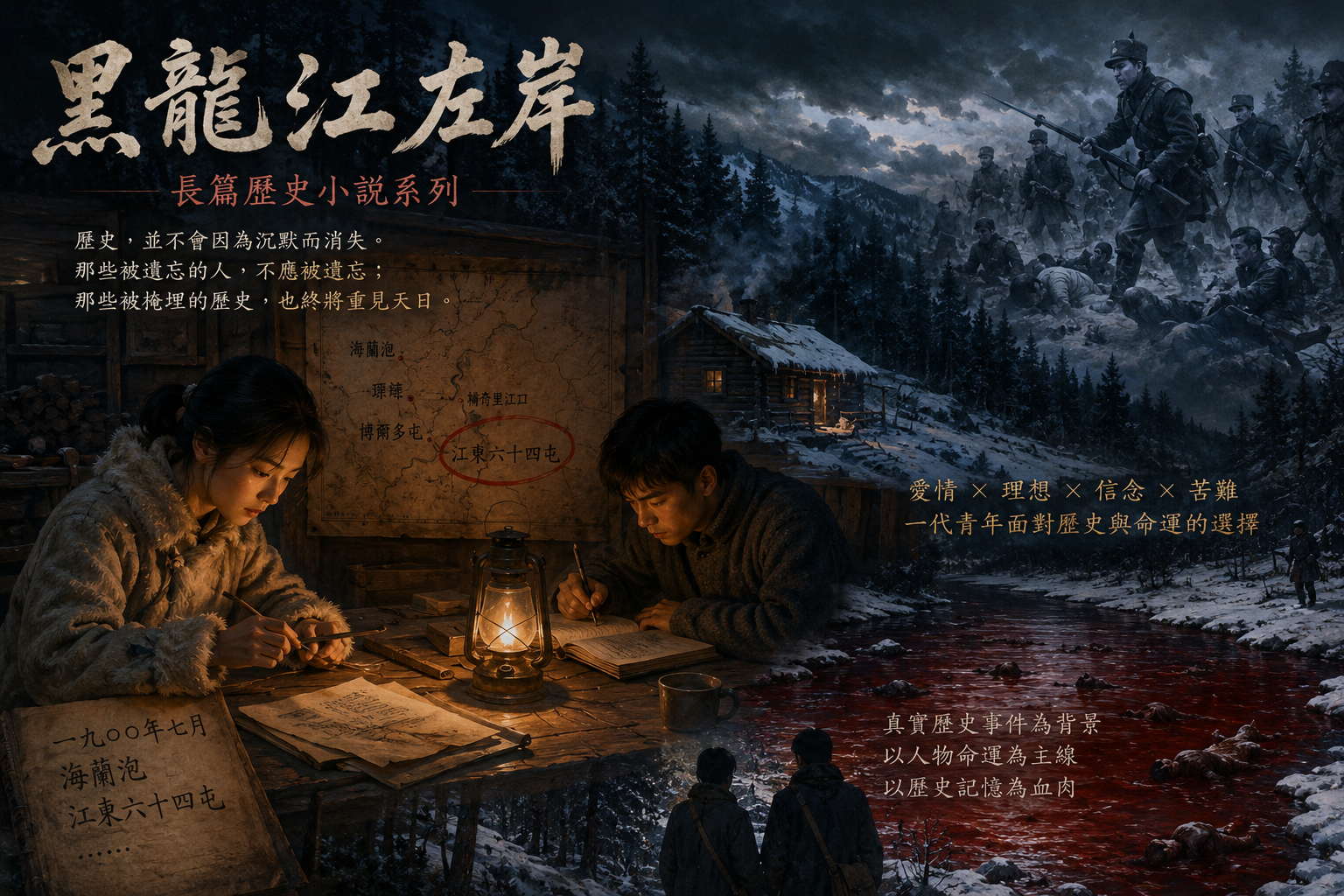
王奶奶小名叫秀秀,她十六歲那年,已經許了人家。婆家就是一個屯的,知根知底。 男方是個打魚人家獨子,名字叫鐵根兒,人老實,話不多,水性好, 是個靠得住, 顧家, 會過日子的人。
秀秀和那個叫鐵根兒的小伙子也不陌生, 一個屯的, 熟的很。 他們兩人其實早就暗中有意,所以媒婆一提親, 秀秀的父母就答應了。 雙方老人都對這門親事滿意, 已經說定,秋收後就辦喜事。
那時候的博爾多屯,是一個非常熱鬧的地方。屯裡的人, 大多務農, 春天播種, 秋天收割,自給自足, 日子過的雖然不寬裕, 但是舒心。 冬天鑿冰洞釣魚, 幾尺長的大馬哈魚, 凍起來, 吃到開春。
除去務農的, 屯裡還有專門打漁為生的, 還有人開豆腐坊, 醬菜坊, 也有人做生意, 把從哈爾濱倒來的貨, 在屯里售賣。另外從哈爾濱遷過來一戶人家, 在屯子裡開了一家東北大鍋菜飯館, 賣的都是東北家常菜, 味道好, 價格公道, 生意紅火的很。
到了趕集的日子,滿人、漢人、達斡爾人, 人來人往, 大大小小的攤位, 有一里地長, 熱鬧非凡。 這時就是孩子們的節日, 在市集裡打鬧,奔跑,玩耍。
女人家都拿著自己編的柳條筐, 一個一個攤位轉悠, 見到可心的東西,就和攤主討價還價, 購買喜歡的各種食品, 日用品。王奶奶小名叫秀秀,她十六歲那年,已經許了人家。婆家就是一個屯的,知根知底。 男方是個打魚人家獨子,名字叫鐵根兒,人老實,話不多,水性好, 是個靠得住, 顧家, 會過日子的人。
秀秀和那個叫鐵根兒的小伙子也不陌生, 一個屯的, 熟的很。 他們兩人其實早就暗中有意,所以媒婆一提親, 秀秀的父母就答應了。 雙方老人都對這門親事滿意, 已經說定,秋收後就辦喜事。
那時候的博爾多屯,是一個非常熱鬧的地方。屯裡的人, 大多務農, 春天播種, 秋天收割,自給自足, 日子過的雖然不寬裕, 但是舒心。 冬天鑿冰洞釣魚, 幾尺長的大馬哈魚, 凍起來, 吃到開春。
除去務農的, 屯裡還有專門打漁為生的, 還有人開豆腐坊, 醬菜坊, 也有人做生意, 把從哈爾濱倒來的貨, 在屯里售賣。另外從哈爾濱遷過來一戶人家, 在屯子裡開了一家東北大鍋菜飯館, 賣的都是東北家常菜, 味道好, 價格公道, 生意紅火的很。
到了趕集的日子,滿人、漢人、達斡爾人, 人來人往, 大大小小的攤位, 有一里地長, 熱鬧非凡。 這時就是孩子們的節日, 在市集裡打鬧,奔跑,玩耍。
女人家都拿著自己編的柳條筐, 一個一個攤位轉悠, 見到可心的東西,就和攤主討價還價, 購買喜歡的各種食品, 日用品。
王奶奶說:「那地方當時窮是窮,可人們的日子過得踏實,舒坦。可是誰也沒想到,大家活了一輩子的地方,忽然有一天,大禍臨頭, 那些老毛子兵, 殺人放火搶東西, 明擺著就是不讓中國人活。」
老人說這句話時,淚水又流了下來,青兒把自己的手絹兒遞給她,老人擦去眼淚,繼續說道:
「那天早上,屯子裡先是聽見遠處有馬蹄聲。起初沒有人太在意,以為又是俄國兵路過。這些年,俄國兵常來常往,有時要糧,有時要草,有時要酒,屯裡人雖然害怕,但是花錢消災, 也只能忍著。
可是那天完全不一樣。
馬蹄聲越來越近,很快就有人喊了起來。秀秀從屋裡跑出來,看見一隊俄國兵已經進了屯子。他們穿著軍裝,背著槍,騎著高頭大馬,手中的馬刀在太陽底下閃著寒光。還沒等屯裡人明白過來,前頭一個軍官模樣的人一揮手,身後的兵就散開了。
接著,槍聲響了。第一個倒下的,是村口一個趕大車的老人。他手裡還牽著馬韁繩,根本不知道發生了什麼,就一頭栽倒在地上。馬受了驚,拖著車仍然往前跑。 女人哭,孩子叫,一時雞飛狗跳,整個屯子亂了套。
然後俄國兵就開始挨家挨戶搜查。他們搶糧食,搶皮貨,搶酒,搶牲口,還糟蹋女人。有人不服氣, 上前理論,那些毛子兵, 也不和你爭辯, 舉手就是一槍, 把人當場打倒。有人想逃,被追上來的毛子兵,不分男女老少, 通通打死。」
秀秀的父親看這次苗頭不對,立刻把秀秀拉回屋裡。
還沒等他們準備好如何應對, 幾個毛子兵就闖進家門。 他們二話不說, 看見秀秀的父親, 立馬就開槍, 打死了秀秀的父親, 然後就是上一篇我們說到的, 那個俄國兵企圖侵犯秀秀的那一幕。
幸虧秀秀機靈, 沒等那個毛子兵反應過來, 就跑出家門, 向遠處的黑松林跑去。她一邊向林子裡跑, 一邊聽見身後陣陣槍聲。她不敢回頭,只是拼命往林子深處跑。山坡上滿是雜草和灌木,樹枝抽打著她的臉,衣裳刮破了,手也被刮出血。
跑到半山腰時,見到老毛子兵沒追來, 她躲在一棵倒下的老松樹後面,喘口氣。 她回頭望去,只見博爾多屯已經是黑煙衝天,一片火海。火光裡還隱約可以看到有人奔跑,後面的俄國兵追著開槍, 奔跑的人一個一個倒下。 」
老人說到這裡,喘著粗氣, 淚水無聲地流了下來。
青兒握著鉛筆的手開始發抖。她低頭看,手指關節發白。盧正鋼也沒有說話。他望著王奶奶,臉色十分沉重。
王奶奶讓自己鎮定了一下, 猛吸了一口煙,聲音開始嘶啞, 看來是動了真情。
「我躲在林子裡,眼睜睜看著屯子在燒, 人被打死。想哭,不敢哭;想喊,不敢喊。我知道,只要出一點動靜,被毛子兵發現,我也活不了。」
到了夜裡,屯子裡的火還沒熄滅。俄國兵殺光了所有他們看見的人, 把能帶走的東西都帶走了,帶不走的就燒。秀秀一直躲到深夜,才慢慢下山, 偷偷回去查看。
她回到家,房子已經燒塌, 整個院子狼藉不堪。她看到父親的屍體已經被燒塌的房子壓在下面。 她在後院找到了母親, 母親衣不蔽體, 胸口被刺刀刺了好幾個洞, 看來這幫該死的俄國人, 沒有抓到她, 就抓住秀秀的母親發洩獸慾, 然後又用刺刀把她殺死。 這是些什麼樣的魔鬼呀, 竟能幹出這種傷天害理的惡行。
她在柴垛後面找到了弟弟。身上好幾個彈孔, 死時眼睛還沒閉上。
王奶奶說: 「她一輩子都無法忘記那一天, 無法忘記父親、 母親、 弟弟, 慘死在老毛子惡魔手下的情景。 」
那個夜晚。她不敢哭出聲,跪在院子裡,用手一點一點刨土,想把母親和弟弟埋起來。可她力氣小,土又硬,只刨出一個淺坑。」
天快亮時,遠處又傳來馬蹄聲,她只好站起來,最後看了一眼已經完全燒毀的家,看了一眼父親, 母親, 弟弟的遺體,帶著父親的獵槍, 轉身又逃進林子。
從那天起,她再也沒回過博爾多屯,不是她不想回, 是回不去了。 俄國人把整個屯子裡的人殺光, 就把那個地方佔領了, 說那是俄國的領土。
秀秀不知道當時大清朝的皇帝幹甚麼去了, 也沒見他們派兵來打老毛子,保護老百姓。 好好的中國地方, 人被老毛子殺光, 地就被他們搶走,就是這麼簡單,無理可講。
青兒終於忍不住問:「那您後來去哪兒了?」
王奶奶說:「家沒了, 親人都沒有了, 我能去哪兒? 就是毫無目的到處走, 躲避老毛子兵, 走到哪裡算哪裡。 我能怎麼辦? 只好到處流浪, 聽天由命。」
「一個十六歲, 就失去親人, 無家可歸的可憐小姑娘?」青兒像是自言自語, 又像是說給老人聽。
「嗯,一個十六歲, 就失去親人, 失去一切的可憐小姑娘。」
王奶奶點點頭 :「白天躲在林子裡,晚上就在林子大樹底下睡。餓了吃野果,渴了喝山溝裡的水。不敢走大路,也不敢靠近有人煙的地方。一路上,我看見很多村子被燒光,到處都是死人,江裡的水面上也飄著滿滿的死人, 都是老毛子用槍趕到江裡,淹死的,打死的。」
說到這裡,老人又流淚, 說不下去了 。青兒起身下炕為老人倒了一杯水, 輕輕地為她搥背 。
王奶奶說: 「不說那些傷心事了, 你們今天來, 奶奶太高興了。 走, 咱們一起包餃子吃。 今天晚上就不要回去了, 大雪天走夜路危險, 你們就住在我這裡, 陪奶奶幾天, 奶奶還有事要和你們說。 」
青兒和盧正鋼交換了一下眼色, 盧正鋼想想,今天來的時候, 還是白天, 都走了四個多小時。 晚上走夜路回去, 白茫茫一片,容易迷路,如果遇到狼群, 那就十分危險, 他朝青兒點點頭, 同意留下來過夜。
看到青兒和盧正鋼同意留下來, 王奶奶高興地笑了。 趕忙出去到院子裡醃肉的大缸, 拿出來一大塊醃狍子肉, 從酸菜缸裡撈酸菜。
看到老人誠心留他們住下, 青兒和盧正鋼也輕鬆了, 放開了, 他們從火炕上下來, 七手八腳地要幫忙。屋子裡因為談那些傷心事導致的沈悶氣氛也一掃而光。
(未完待續)Xiuxiu was Grandma Wang's childhood name. By the time she was sixteen, her marriage had already been arranged. Her future husband's family lived in the same village, and both families had known one another for generations. The young man, named Tiegen, was the only son of a fishing family. Honest, quiet, an excellent swimmer, he was the kind of man people trusted—steady, hardworking, devoted to his family, and capable of building a good life.
Xiuxiu knew Tiegen well. They had grown up in the same village and had known each other since childhood. In truth, affection had already quietly blossomed between them. So when the matchmaker formally proposed the marriage, Xiuxiu's parents readily agreed. Both families were delighted with the arrangement, and it had already been decided that the wedding would take place after the autumn harvest.
In those days, Bordo Village was a lively and prosperous settlement. Most of its people lived by farming. Every spring they sowed their fields; every autumn they gathered the harvest. Life was simple and far from wealthy, but it was peaceful and satisfying. During the long winters, the villagers chopped holes through the frozen river to catch salmon. Fish several feet long were frozen outdoors and lasted until spring.
Besides the farmers, there were professional fishermen, families who operated tofu workshops and pickle shops, and merchants who brought goods from Harbin to sell in the village. A family that had moved from Harbin had even opened a Northeastern-style restaurant serving hearty country dishes—simple, delicious, reasonably priced, and always crowded with customers.
Whenever market day arrived, Manchus, Han Chinese, and Daur people filled the streets. Stalls stretched for nearly a mile, creating a bustling marketplace alive with voices and laughter. For the village children, market day was the greatest holiday of all. They raced through the crowds, chasing one another, laughing, and playing from one end of the fair to the other.
The women carried willow baskets they had woven themselves, wandering from stall to stall. Whenever they spotted something they liked, they bargained cheerfully with the vendors before buying food, household necessities, and little treasures for their families.Xiuxiu was Grandma Wang's childhood name. By the time she was sixteen, her marriage had already been arranged. Her future husband's family lived in the same village, and both families had known one another for generations. The young man, named Tiegen, was the only son of a fishing family. Honest, quiet, an excellent swimmer, he was the kind of man people trusted—steady, hardworking, devoted to his family, and capable of building a good life.
Xiuxiu knew Tiegen well. They had grown up in the same village and had known each other since childhood. In truth, affection had already quietly blossomed between them. So when the matchmaker formally proposed the marriage, Xiuxiu's parents readily agreed. Both families were delighted with the arrangement, and it had already been decided that the wedding would take place after the autumn harvest.
In those days, Bordo Village was a lively and prosperous settlement. Most of its people lived by farming. Every spring they sowed their fields; every autumn they gathered the harvest. Life was simple and far from wealthy, but it was peaceful and satisfying. During the long winters, the villagers chopped holes through the frozen river to catch salmon. Fish several feet long were frozen outdoors and lasted until spring.
Besides the farmers, there were professional fishermen, families who operated tofu workshops and pickle shops, and merchants who brought goods from Harbin to sell in the village. A family that had moved from Harbin had even opened a Northeastern-style restaurant serving hearty country dishes—simple, delicious, reasonably priced, and always crowded with customers.
Whenever market day arrived, Manchus, Han Chinese, and Daur people filled the streets. Stalls stretched for nearly a mile, creating a bustling marketplace alive with voices and laughter. For the village children, market day was the greatest holiday of all. They raced through the crowds, chasing one another, laughing, and playing from one end of the fair to the other.
The women carried willow baskets they had woven themselves, wandering from stall to stall. Whenever they spotted something they liked, they bargained cheerfully with the vendors before buying food, household necessities, and little treasures for their families.
Grandma Wang sighed softly.
"We were poor, yes—but we lived honest, peaceful lives. No one ever imagined that the place where our families had lived for generations would one day be struck by disaster. Those Russian soldiers came to kill, burn, and rob. It was plain as day—they meant to wipe the Chinese people from that land."
As she spoke, tears once again rolled down her wrinkled cheeks. Qing'er quietly handed her a handkerchief. After wiping away her tears, the old woman continued.
"That morning, the village first heard the sound of horses' hooves in the distance. At first, no one paid much attention. They thought it was simply another patrol of Russian soldiers passing through. In those years, Russian troops came and went frequently. Sometimes they demanded grain, sometimes hay, sometimes liquor. The villagers were frightened, but they could only buy themselves a little peace with whatever they had and endure the humiliation."
"But that day was different."
The hoofbeats drew closer and closer. Before long, someone began shouting in alarm. Xiuxiu rushed out of the house and saw a column of Russian soldiers riding into the village. They wore military uniforms, rifles slung across their backs, and sat atop tall horses. Their sabers flashed coldly beneath the morning sun. Before the villagers could even understand what was happening, an officer at the front raised his hand, and the soldiers immediately spread out in every direction.
Then came the gunfire.
The first man to fall was an elderly villager driving a horse cart near the entrance to the village. He was still holding the reins, completely unaware of what was happening, when a bullet struck him and he collapsed to the ground. Startled by the gunshot, the frightened horse bolted forward, dragging the cart behind it. Women cried. Children screamed. Chickens scattered, dogs barked wildly, and within moments the entire village was thrown into utter chaos.
Then the Russian soldiers began searching every house.
They seized grain, furs, liquor, livestock—anything of value. They violated women. Anyone who dared protest was met without a word of argument; the soldiers simply raised their rifles and shot them where they stood. Those who tried to flee were hunted down, and regardless of whether they were men, women, old people, or children, they were all killed without mercy.
Xiuxiu's father immediately realized something was terribly wrong. He pulled his daughter back inside the house.
Before they even had time to decide where to hide, several Russian soldiers burst through the door. Without saying a single word, they saw Xiuxiu's father and immediately shot him dead. What happened next was exactly as I told you before—the Russian soldier who tried to assault young Xiuxiu.
Fortunately, Xiuxiu reacted instantly. Before the soldier could seize her, she darted past him, rushed out of the house, and fled toward the distant black pine forest. As she ran, wave after wave of gunfire echoed behind her. She dared not look back. She simply ran deeper and deeper into the woods with every ounce of strength she had. Thick brush and thorny shrubs covered the mountainside. Branches lashed across her face, tore her clothes, and left her hands bleeding.
When she reached halfway up the mountain and realized the Russian soldiers were no longer chasing her, she hid behind the trunk of a fallen old pine tree to catch her breath. Looking back, she saw Bordo Village engulfed beneath towering columns of black smoke and a sea of flames. Through the fire she could still make out people desperately running for their lives, while Russian soldiers pursued them on horseback, firing again and again. One fleeing figure after another collapsed to the ground.
At this point, Grandma Wang fell silent. She was breathing heavily now, and tears streamed silently down her weathered face.
Qing'er's hand, still holding her pencil, began to tremble. She lowered her eyes and saw that her knuckles had turned white. Lu Zhenggang remained silent as well. He looked steadily at Grandma Wang, his face weighed down with sorrow.
Grandma Wang forced herself to regain her composure. She drew deeply on her long tobacco pipe. When she spoke again, her voice had grown hoarse with emotion.
"I hid in the forest and watched helplessly as my village burned and my people were murdered. I wanted to cry, but I dared not. I wanted to scream, but I dared not. I knew that if I made the slightest sound and the Russian soldiers found me, I would die too."
By nightfall, the fires in the village were still raging. The Russian soldiers had killed everyone they could find. Anything they could carry away, they looted. Whatever they could not take, they burned. Xiuxiu remained hidden deep in the forest until the middle of the night before she finally gathered the courage to creep back and see what had become of her home.
When she reached the house, it had already collapsed into blackened ruins. The entire courtyard lay in devastation. Beneath the charred beams of the fallen house she found her father's body, crushed under the wreckage.
In the backyard she found her mother.
Her clothes had been torn away, and several deep bayonet wounds pierced her chest. It was painfully clear what had happened. Unable to capture Xiuxiu, those beasts had seized her mother instead, violated her, and then murdered her with their bayonets.
What kind of monsters could commit such unspeakable evil?
She found her younger brother lying behind the pile of firewood. Several bullet holes pierced his small body. Even in death, his eyes remained open, as though he were still waiting for someone to come home.
Grandma Wang lowered her head.
"I have never forgotten that day. Not for a single moment. I can still see my father... my mother... my little brother... all dying beneath the hands of those Russian devils."
That night, Xiuxiu dared not cry aloud. She knelt alone in the courtyard, digging at the frozen ground with her bare hands, hoping to bury her mother and younger brother. But she was only a sixteen-year-old girl. The earth was frozen solid, and despite all her effort, she managed to scrape out only a shallow grave.
As dawn approached, she heard the sound of horses again in the distance.
She knew the Russian soldiers had returned.
With no other choice, she stood up. She took one last look at the home that had been reduced to ashes, one last look at the bodies of her father, mother, and younger brother. Carrying only her father's hunting rifle, she turned and disappeared once more into the forest.
From that day on, she never returned to Bordo Village. It was not because she did not want to return,it was because there was no home left to return to.
The Russians had slaughtered everyone in the village. Then they occupied the land itself and simply declared that it now belonged to Russia.
Xiuxiu never understood where the Emperor of the Great Qing had been during those terrible days. No soldiers ever came to drive away the Russians or protect the people. A piece of Chinese land, its people murdered, was simply taken away by force.
It happened just like that.
There was no justice to be found.
Qing'er could no longer hold back.
"Where did you go after that?"
Grandma Wang gave a faint, bitter smile.
"My home was gone. My family was gone. Where else could I go? I wandered without any destination, hiding from the Russian soldiers, going wherever my feet carried me. What choice did I have? I could only drift from place to place and leave my fate to Heaven."
"A sixteen-year-old girl... who had already lost her family and had nowhere left to call home?"
Qing'er spoke almost to herself, yet it was also as though she were speaking to the old woman before her.
Grandma Wang nodded slowly.
"Yes. A sixteen-year-old girl who had already lost everything."
"During the day I hid deep in the forest. At night I slept beneath the great pine trees. When I was hungry, I ate wild berries. When I was thirsty, I drank from the mountain streams. I never dared to travel the main roads, nor did I dare go near places where people lived. Along the way I saw village after village burned to the ground. Corpses lay everywhere. Even the surface of the Heilongjiang River was covered with floating bodies—people whom the Russian soldiers had driven into the river at gunpoint, people who had been drowned or shot to death."
When she reached this point, Grandma Wang broke down once more. Tears rolled silently down her cheeks, and for a long while she could not continue.
Qing'er quietly climbed down from the heated kang, poured her a bowl of warm water, then gently stood behind her, softly patting her back.
After a long silence, Grandma Wang forced a smile.
"Enough of those heartbreaking memories. I'm truly happy that you two came today. Come on—let's make dumplings together. Don't go back tonight. It's dangerous to travel through the mountains after dark in weather like this. Stay here with Grandma for a few days. There are still many things I want to tell you."
Qing'er exchanged a glance with Lu Zhenggang.
Lu Zhenggang thought for a moment. They had left in broad daylight that morning, yet it had still taken them more than four hours to reach the cabin. Returning tonight through the endless snow-covered mountains would be dangerous. They could easily lose their way, and if they happened to encounter a pack of wolves, the consequences would be unimaginable.
He looked at Qing'er and gave a quiet nod.
He agreed that they should stay the night.
When Grandma Wang saw that both of them had accepted her invitation, her face immediately lit up with delight.
She hurried out into the courtyard, opened the large crock where she had stored salted roe deer meat, cut off a generous piece, then lifted the lid of the pickle jar and took out some sauerkraut.
Seeing how sincerely the old woman wished them to stay, Qing'er and Lu Zhenggang finally relaxed as well. They climbed down from the heated kang and rushed over to help, each lending a hand wherever they could. The heavy atmosphere that had filled the room while they spoke of those painful memories gradually melted away, replaced once again by the warmth of an ordinary Northeastern home.
(To be continued)