可憐的香菱之死 The Death of the Pitiful Xiangling The Death of the Pitiful Xiangling 可憐的香菱之死
中篇小說(110) Novella (110)
中文全文 Ch-full 中文介紹 Ch-intro 繁體/簡體 TC/SC 英文全文 Eng-full 英文介紹 Eng-intro
賈寶玉後來常常想,大觀園裡那麼多女孩子,若論命最苦的,也許不是林黛玉,不是晴雯,甚至不是迎春,而是香菱。
因為別人的悲劇,多少還有過光亮。
只有香菱,好像從一出生開始,就一直在被命運慢慢折磨,慢慢吞吃。
為了說清楚香菱是誰 , 我們必須從香菱的身世說起。 香菱本名是甄英蓮, 父親甄士隱,是住在姑蘇城閶門外的鄉宦,家境殷實。他稟性恬淡,不慕功名,每日以賞花酌酒、吟詩為樂,是個超然物外的「神仙一流人品」。
甄英蓮是甄士隱老年時才出生的女兒, 在老來得女的情況下,他將女兒英蓮視為掌上明珠。是被父母捧在手心裡的千金小姐。
那時候,她生得粉雕玉琢,眉目清秀,像個小玉人。甄士隱夫妻疼她疼得不得了,天天帶在身邊,生怕磕著碰著。
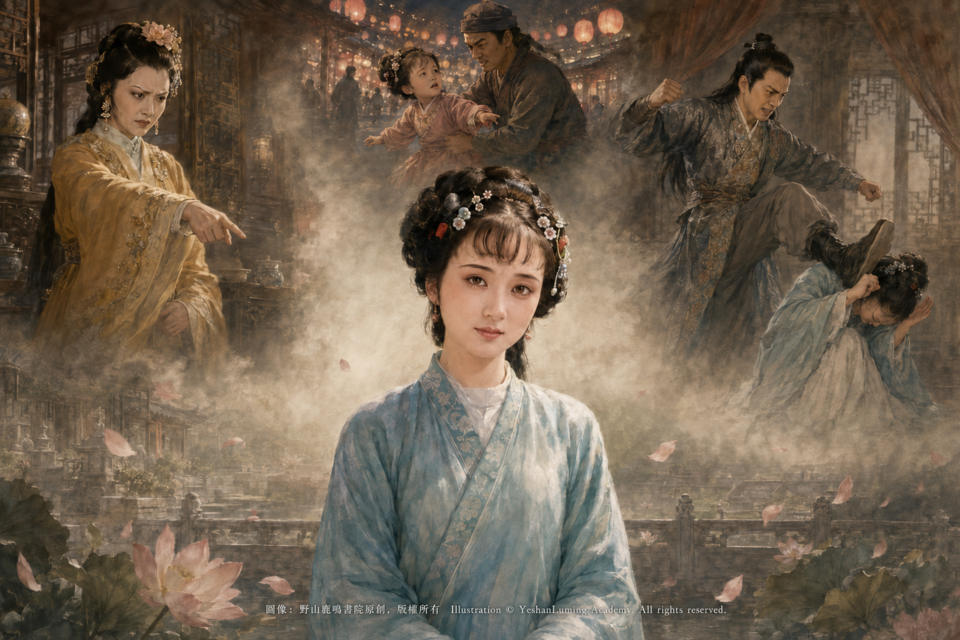
但是禍起蕭牆, 元宵當晚,僕人霍啟帶着他們三歲的女兒英蓮去看花燈。霍啟因上廁所疏忽,英蓮不幸被拐子拐走。
人說禍不單行, 正當甄士隱夫婦為女兒丟失, 身心俱疲, 惶惶然不知如何是好時, 三月十五日,隔壁葫蘆廟炸供引發大火。火勢蔓延,將甄家燒成一片廢墟。
甄士隱無奈之下,只好變賣田產,帶着妻子投靠岳父封肅。 誰知卻飽受岳父白眼。 他的岳父封肅為人市儈,不僅半路坑騙甄士隱的銀兩,還天天當面說風涼話,嫌棄他無能。
賈寶玉後來常常想,大觀園裡那麼多女孩子,若論命最苦的,也許不是林黛玉,不是晴雯,甚至不是迎春,而是香菱。
因為別人的悲劇,多少還有過光亮。
只有香菱,好像從一出生開始,就一直在被命運慢慢折磨,慢慢吞吃。
為了說清楚香菱是誰 , 我們必須從香菱的身世說起。 香菱本名是甄英蓮, 父親甄士隱,是住在姑蘇城閶門外的鄉宦,家境殷實。他稟性恬淡,不慕功名,每日以賞花酌酒、吟詩為樂,是個超然物外的「神仙一流人品」。
甄英蓮是甄士隱老年時才出生的女兒, 在老來得女的情況下,他將女兒英蓮視為掌上明珠。是被父母捧在手心裡的千金小姐。
那時候,她生得粉雕玉琢,眉目清秀,像個小玉人。甄士隱夫妻疼她疼得不得了,天天帶在身邊,生怕磕著碰著。
但是禍起蕭牆, 元宵當晚,僕人霍啟帶着他們三歲的女兒英蓮去看花燈。霍啟因上廁所疏忽,英蓮不幸被拐子拐走。
人說禍不單行, 正當甄士隱夫婦為女兒丟失, 身心俱疲, 惶惶然不知如何是好時, 三月十五日,隔壁葫蘆廟炸供引發大火。火勢蔓延,將甄家燒成一片廢墟。
甄士隱無奈之下,只好變賣田產,帶着妻子投靠岳父封肅。 誰知卻飽受岳父白眼。 他的岳父封肅為人市儈,不僅半路坑騙甄士隱的銀兩,還天天當面說風涼話,嫌棄他無能。
甄士隱因此對人生灰心到極點,最後貧病交加,陷入絕境。 經此大劫, 他身心俱疲, 已經失去對生活的希望。 就在他陷於絕望的時候, 他在街上偶然遇到一個跛足道人, 那個道人見到痛不欲生的甄士隱, 沒有說什麼, 就是唱了一首 《好了歌》:
「世人都曉神仙好,惟有功名忘不了!古今將相今何在?荒塚一堆草沒了。
世人都曉神仙好,只有金銀忘不了!終朝只恨聚無多,及至多時眼閉了。
世人都曉神仙好,只有嬌妻忘不了!君生日日說恩情,君死又隨人去了。
世人都曉神仙好,只有兒孫忘不了!痴心父母古來多,孝順兒孫誰見了?」
甄士隱聽完跛足道人的《好了歌》後,腦子裡轟的一聲,當場頓悟。 他不假思索, 而是自然而然地,不受控制地, 隨口念出了下面這段注釋,將世間的名利、恩愛、財富和權力,用極其辛辣且精練的詩句戳破:
陋室空堂,當年笏滿床;
衰草枯楊,曾為歌舞場。
蛛絲兒結滿雕梁,綠紗今又糊在窗上。
說甚麼脂正濃、粉正香,如何兩鬢又成霜?
昨日黃土隴頭送白骨,今宵紅燈帳底臥鴛鴦。
金滿箱,銀滿箱,展眼乞丐人皆謗。
正嘆他人命不長,那知自己歸來喪!
訓有方,保不定日後作強梁。
擇膏粱,誰承望流落在煙花巷!
因嫌紗帽小,致使鎖枷扛;
昨憐破襖寒,今嫌紫蟒長。
亂烘烘你方唱罷我登場,反認他鄉是故鄉。
甚荒唐,到頭來都是為他人作嫁衣裳!
甄士隱真正悟通了人生真諦, 就隨著跛足道人出家,走了, 但是他可憐的女兒甄英蓮的苦日子才剛剛開始。
甄英蓮遭拐賣後幾經轉手,長大後被賣給鄉紳馮淵,卻又遭惡霸薛蟠強搶,並且為此鬧出人命, 從此淪為薛蟠的妾室。薛寶釵為她取名:「香菱」。
賈寶玉第一次真正注意到香菱,是她進入大觀園之後。
那時候的香菱,已經是薛蟠的妾。她不像襲人那樣伶俐,也不像晴雯那樣鮮亮。她總是安安靜靜的,說話輕聲細語,見了人便帶著幾分怯意,好像生怕自己做錯什麼。
可就是這樣一個柔弱女子,偏偏對詩有一種近乎癡迷的熱愛。
她看黛玉作詩,看寶玉談詩,看湘雲聯句,眼裡常常帶著羨慕。後來她終於鼓起勇氣,去求黛玉教她作詩。林黛玉起初還嫌她笨,可慢慢地,竟也真心喜歡起這個學生來。
那段日子,大概是香菱一生中最快樂的時候。
她整天捧著詩稿,苦苦琢磨,連睡夢裡都在想句子。有一次,她為了想一句詩,竟站在池邊發呆,連水裡的鴨子游遠了都不知道。寶玉看見了,忍不住笑她:「這可真成了詩魔了。」
香菱也笑。
那笑容,很淡,很乾淨。
寶玉後來想,也許那時候的香菱,才第一次像個真正活著的人。
因為在此之前,她只是別人的附屬品。
她是個被拐賣的女孩,是薛蟠的小妾,是可以被隨意打罵的奴婢。只有在學詩的時候,她才像一個真正有靈魂的人。
甚至連林黛玉,都真心欣賞過她。黛玉曾說:「這人悟性倒好。」這一句稱讚,對香菱來說,簡直像黑夜裡的一點燈火。
可是《紅樓夢》裡,凡是稍微有一點光亮的東西,最後幾乎都會被毀掉。
後來,薛蟠的妻子夏金桂進門了。那個女人一進薛家,香菱的命運便徹底掉進了地獄。夏金桂生性刻毒,又極善妒。她見香菱生得清秀,性情溫順,便恨得牙癢癢。她故意把香菱改名為「秋菱」,表面上只是換個名字,其實卻是在羞辱她。
秋者,衰也。
菱者,飄也。
彷彿從那時起,香菱的人生便注定只剩下枯萎。
夏金桂日日折磨她,故意刁難,百般羞辱,動輒打罵。薛蟠原本就是個糊塗混帳,只知聽老婆挑唆。後來夏金桂甚至故意誣陷,香菱與寶玉有私情。
這件事,其實荒唐得可笑。
寶玉憐惜香菱,是真的;欣賞她,也是真的。可是寶玉對她,更像是一種對薄命女子的疼惜。他看見香菱,就像看見另一個世界裡被折磨的苦命女孩。
可在那個時代,男女之間,只要稍微親近一些,便可以被編造成骯髒罪名。
夏金桂利用了這一點,薛蟠聽後大怒,對香菱拳打腳踢。香菱卻仍然不爭,不辯,不哭喊。她只是默默忍著。
她忍了一輩子,小時候被拐,她忍;被賣給薛蟠,她忍;被人輕賤,她忍;如今被夏金桂折磨,她還是忍。可是人的命,再能忍,也終究有熬乾的一天。
圖像:野山鹿鳴書院原創 版權所有 Illustration © YeshanLuming Academy. All rights reserved. 點擊查看大圖
Looking back years later, Jia Baoyu often found himself thinking that among all the girls of the Grand View Garden, the one whose fate was the cruelest was perhaps neither Lin Daiyu, nor Qingwen, nor even Yingchun.
It was Xiangling.
For the tragedies of the others, however heartbreaking, had at least known moments of light.
Only Xiangling seemed to have been slowly tormented, slowly,consumed by fate from the very moment she entered this world.
To understand who Xiangling truly was, we must begin with her origins.
Xiangling's original name was Zhen Yinglian. Her father, Zhen Shiyin, was a retired country gentleman living outside Changmen Gate in Suzhou.
His family was comfortably well off. Gentle by nature and indifferent to fame or official success, he spent his days appreciating flowers, drinking wine, and composing poetry. He was regarded as "a man of almost immortal character," someone who seemed to stand apart from the ordinary world.
Zhen Yinglian was born when Zhen Shiyin was already an old man. Having gained a daughter so late in life, he treasured little Yinglian as the jewel in his palm. She was the beloved daughter upon whom both her parents lavished all their affection.
As a little child, she was exquisitely beautiful, delicate as carved jade, with graceful features and bright, innocent eyes. Zhen Shiyin and his wife adored her beyond measure. They kept her constantly by their side, afraid that the slightest accident might befall her.
Looking back years later, Jia Baoyu often found himself thinking that among all the girls of the Grand View Garden, the one whose fate was the cruelest was perhaps neither Lin Daiyu, nor Qingwen, nor even Yingchun.
It was Xiangling.
For the tragedies of the others, however heartbreaking, had at least known moments of light.
Only Xiangling seemed to have been slowly tormented, slowly,consumed by fate from the very moment she entered this world.
To understand who Xiangling truly was, we must begin with her origins.
Xiangling's original name was Zhen Yinglian. Her father, Zhen Shiyin, was a retired country gentleman living outside Changmen Gate in Suzhou.
His family was comfortably well off. Gentle by nature and indifferent to fame or official success, he spent his days appreciating flowers, drinking wine, and composing poetry. He was regarded as "a man of almost immortal character," someone who seemed to stand apart from the ordinary world.
Zhen Yinglian was born when Zhen Shiyin was already an old man. Having gained a daughter so late in life, he treasured little Yinglian as the jewel in his palm. She was the beloved daughter upon whom both her parents lavished all their affection.
As a little child, she was exquisitely beautiful, delicate as carved jade, with graceful features and bright, innocent eyes. Zhen Shiyin and his wife adored her beyond measure. They kept her constantly by their side, afraid that the slightest accident might befall her.
But disaster often begins where one least expects it.
On the night of the Lantern Festival, the family servant Huo Qi took their three-year-old daughter Yinglian out to see the lantern displays. While Huo Qi stepped away briefly to relieve himself, he let down his guard,and the little girl was abducted by a child trafficker.
Misfortunes, as people say, never come alone.
While Zhen Shiyin and his wife were still exhausted with grief and desperately searching for their missing daughter, another calamity struck.
On the fifteenth day of the third lunar month, a ceremonial explosion at the neighboring Gourd Temple accidentally ignited a massive fire. The flames spread rapidly, reducing the entire Zhen household to ashes.
Left with no other choice, Zhen Shiyin sold what remained of his property and, together with his wife, sought refuge with his father-in-law, Feng Su.
Instead of receiving sympathy, however, he was met only with contempt.
Feng Su was a petty and calculating man. Not only did he cheat Zhen Shiyin out of much of his remaining money along the way, but he mocked him day after day, ridiculing him as a useless failure.
Zhen Shiyin fell into utter despair. Broken in both body and spirit, burdened by poverty and illness, he gradually lost all hope in life.
Then, at the very moment when he stood on the edge of complete hopelessness, he happened to encounter a lame Taoist priest in the street.
Seeing the grief-stricken Zhen Shiyin, the Taoist said nothing.
He simply began to sing "The Song of Well-Ending."
"All men know that immortals are good,
Yet none can forget the pursuit of fame.
Where are the great generals and ministers of old?
Their tombs are overgrown with weeds.
All men know that immortals are good,
Yet none can forget gold and silver.
They complain all day that they have gathered too little;
When they have gathered enough, their eyes close forever.
All men know that immortals are good,
Yet none can forget their lovely wives.
While you live, she speaks only of love;
Once you die, she belongs to another.
All men know that immortals are good,
Yet none can forget their sons and grandsons.
Loving parents have existed throughout the ages;
But where are the truly filial children?"
After hearing "The Song of Well-Ending," something exploded inside Zhen Shiyin's mind.
In that instant, he was suddenly enlightened.
Without conscious thought, almost beyond his own control, the following verses flowed naturally from his lips,a commentary that pierced through fame, love, wealth, and power with astonishing clarity and ruthless precision:
Empty halls now stand where once great mansions flourished;
Rank tablets once filled every room.
Withered grass and dying poplars now cover
Places that were once filled with music and dancing.
Spider webs cling to carved beams,
While green silk is pasted once again upon broken windows.
Why boast that rouge is still fresh and powder still fragrant,
When before long both temples turn white?
Yesterday, white bones were buried beneath yellow earth;
Tonight, beneath red bridal curtains, lovers embrace.
Chests overflow with gold and silver,
Yet in the blink of an eye, beggars become objects of contempt.
While lamenting that another's life is too short,
Who knows that death is already returning for oneself?
You teach your sons with every care,
Yet who can guarantee they will not become bandits?
You choose rich and noble marriages,
Yet who expects them to end in the pleasure quarters?
Dissatisfied with a modest official's cap,
You end up carrying the criminal's cangue.
Yesterday you pitied ragged clothes for being too thin;
Today you complain that embroidered robes are too heavy.
In the endless bustle, one performer leaves the stage and another takes his place,
Mistaking a foreign land for home.
How utterly absurd!
In the end, all your labor serves only to make wedding garments for someone else.
Only then did Zhen Shiyin truly awaken to the meaning of life.
He followed the lame Taoist away, left the secular world behind, and became a wanderer.
But for his unfortunate daughter, Zhen Yinglian, the days of suffering had only just begun.
After being kidnapped, Yinglian was sold from one owner to another.
When she reached adulthood, she was purchased by the country gentleman Feng Yuan. Before they could marry, however, the local bully Xue Pan seized her by force, causing Feng Yuan's death in the conflict that followed.
From that moment on, she became Xue Pan's concubine.
It was Xue Baochai who gave her a new name:
Xiangling.
The first time Jia Baoyu truly began to notice Xiangling was after she entered the Grand View Garden.
By then, Xiangling had already become Xue Pan's concubine. She was not as quick witted as Xiren, nor as brilliant and spirited as Qingwen. She was always quiet, speaking in a soft voice, carrying herself with a hint of timidity whenever she met someone, as though she were constantly afraid of doing something wrong.
Yet this gentle and fragile woman possessed an almost obsessive love for poetry.
She watched Daiyu compose poems, listened to Baoyu discuss poetry, and admired Xiangyun as she improvised verses. Her eyes were often filled with quiet longing.
At last, she gathered enough courage to ask Lin Daiyu to teach her how to write poetry.
At first, Daiyu thought she was rather slow.But little by little, she came to genuinely like this earnest student.
Those days were probably the happiest Xiangling would ever know.
She carried her notebooks of poems everywhere, pondering every line with tireless devotion. Even in her dreams, she was still searching for the perfect verse.
Once, while struggling to compose a single line of poetry, she stood absentmindedly beside a pond for so long that she failed to notice the ducks swimming quietly away.
When Baoyu saw her, he could not help laughing.
"You've truly become possessed by poetry."
Xiangling laughed too.
Her smile was faint.
It was simple.
It was pure.
Looking back years later, Baoyu often thought that perhaps those were the first days in Xiangling's life when she truly lived as a human being.
For before that, she had existed only as someone else's possession.
She had been a kidnapped child.
She had been Xue Pan's concubine.
She had been a servant who could be beaten and humiliated at will.
Only when she was studying poetry did she become someone with a soul of her own.
Even Lin Daiyu came to admire her sincerely。 Daiyu once said,
"This girl has real insight."
To Xiangling, those few words of praise were like a tiny lamp shining in the darkness.
But in Dream of the Red Chamber, anything that possesses even the smallest glimmer of light is almost always destined to be destroyed in the end.
Later, Xia Jingui entered the Xue household as Xue Pan's wife.
The moment that woman stepped into the Xue family, Xiangling's fate plunged completely into hell.
Xia Jingui was vicious by nature and consumed by jealousy. Seeing that Xiangling was graceful in appearance and gentle in temperament, she hated her with all her heart.
She deliberately changed Xiangling's name to Qiuling.
On the surface, it seemed to be nothing more than a new name.
In truth, it was meant as a humiliation.
"Qiu" ,means autumn,the season of decline.
"Ling" , suggests drifting water chestnuts, carried wherever the current takes them.
From that moment on, it was as though Xiangling's life had been destined to do nothing but wither away.
Day after day, Xia Jingui tormented her.
She found fault with her on purpose, humiliated her in every possible way, and beat or scolded her whenever she pleased.
Xue Pan himself was already a muddle-headed brute who listened only to his wife's instigation.
Later, Xia Jingui even deliberately accused Xiangling of having an improper relationship with Baoyu.
The accusation itself was absurd.
It was true that Baoyu pitied Xiangling.
It was true that he admired her.
But his feelings for her were nothing more than compassion for another unfortunate woman.
Whenever Baoyu looked at Xiangling, it was as though he were looking into another world,a world where yet another innocent girl had been crushed by fate.
But in that age, whenever a man and a woman appeared even slightly close, people could easily weave the most filthy accusations around them.
Xia Jingui took full advantage of that.
When Xue Pan heard the rumor, he flew into a rage and beat Xiangling mercilessly.
Yet Xiangling neither argued, nor defended herself, nor cried out.
She simply endured it all in silence;
She had endured her entire life;
She endured being kidnapped as a child;
She endured being sold to Xue Pan;
She endured being despised and humiliated.
And now she endured Xia Jingui's endless cruelty as well.
But no matter how much a person can endure, every life eventually reaches the point where nothing remains to be exhausted.
圖像:野山鹿鳴書院原創 版權所有 Illustration © YeshanLuming Academy. All rights reserved. 點擊查看大圖
返回介紹 Back to Intro
返回介紹 Back to Intro