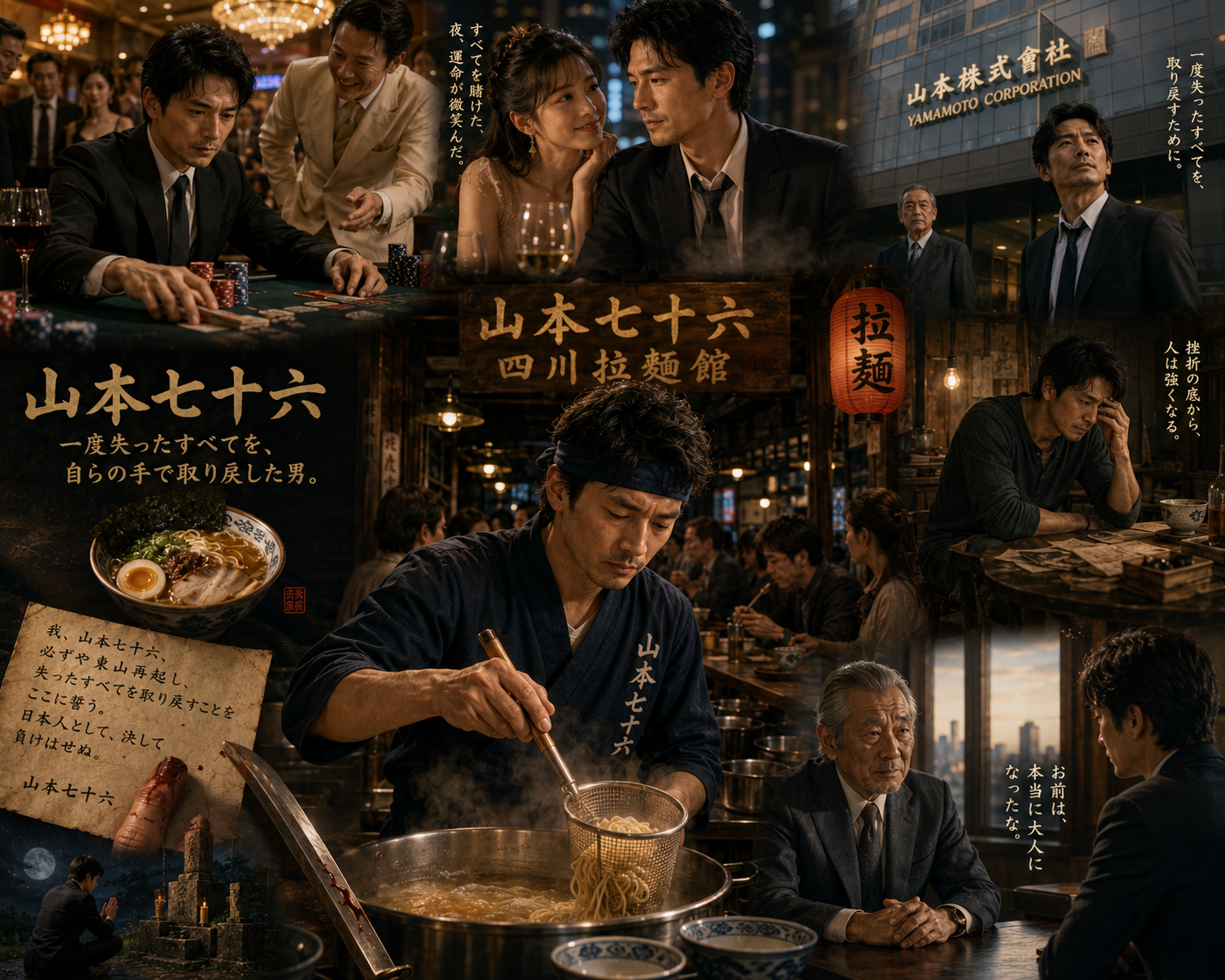
在日本大阪,有一個哥們兒, 名字叫山本七十六。
這名字,別人聽了都要微微一怔,然後多看他兩眼, 這個名字怎麼這麼熟悉呢 ?
稍微有點歷史知識的人,都會立刻想起另一個名字,山本五十六。日本海軍大將,偷襲珍珠港的策劃者,最後乘飛機被美國人擊落,掉到南太平洋海底 , 喂鯊魚了。
至於這位山本七十六, 和山本五十六是否有什麼關聯, 沒人知曉, 沒人查證,也沒人敢當面問他。
只是大家都知道,這位山本七十六君, 是個有錢人家的公子哥兒,受過良好教育,是美國哈佛商學院畢業的碩士,回國後進了自家企業,幫父親打理生意。
山本家的公司,名叫山本株式會社,主業房地產。在大阪、神戶一帶,有幾棟像樣的高級商業樓宇,都是山本家的產業。在日本大阪,有一個哥們兒, 名字叫山本七十六。
這名字,別人聽了都要微微一怔,然後多看他兩眼, 這個名字怎麼這麼熟悉呢 ?
稍微有點歷史知識的人,都會立刻想起另一個名字,山本五十六。日本海軍大將,偷襲珍珠港的策劃者,最後乘飛機被美國人擊落,掉到南太平洋海底 , 喂鯊魚了。
至於這位山本七十六, 和山本五十六是否有什麼關聯, 沒人知曉, 沒人查證,也沒人敢當面問他。
只是大家都知道,這位山本七十六君, 是個有錢人家的公子哥兒,受過良好教育,是美國哈佛商學院畢業的碩士,回國後進了自家企業,幫父親打理生意。
山本家的公司,名叫山本株式會社,主業房地產。在大阪、神戶一帶,有幾棟像樣的高級商業樓宇,都是山本家的產業。
不過近些年來,有一個兇猛的對手出現,佐藤地產, 和他們競爭不擇手段, 對山本家的事業構成嚴重威脅。
他們兩家現在是實力相當,互不服氣,明裡暗裡,不知較了多少次勁, 互有勝負,是一對針尖對麥芒的生死競爭對手。
表面上兩家公司, 見面仍然客客氣氣, 開口就是: “ ごめん “ (對不起)點頭哈腰,背地裡卻都恨不得咬死對方,一口吞下去。
山本七十六的父親,六十歲出頭, 個頭不高, 對誰都是滿面和氣,笑容可鞠。 他做了一輩子生意,心思慎密, 出手極狠, 所以事業發達。
兒子山本七十六,從美國回來後,從底層做起, 觀察了兩年,便把生意完全交給兒子打理。 山本七十六成了公司的董事長兼總裁, 老人家宣布退休,要去國外養老,從今以後,公司全交給兒子。
臨別那天,他只淡淡說了一句:“現在一切靠你自己, 好自為之。”
說完,他便消失了。去了哪個國家,住在哪裡,連兒子山本七十六都不知道, 更不用說公司裡那幾個老臣子, 他們只知道,老爺子這次是徹底撒手,不管公司業務了。
山本七十六接手後,開始做得還相當漂亮。他讀的是西方商科,講究數據,講究流程,講究速度,和他父親那一套靠經驗、靠氣味聞市場的老辦法,很不一樣。
幾個項目做下來,公司利潤直線上升。員工們嘴上不說,心裡卻都服了這位少東家。
連一向和山本家不對付的佐藤地產,也明顯感覺對手和以前不同了, 更加難對付。他們感到緊張, 意識到, 這時的山本株式會社,是一個真正難纏的對手,令他們感到真正的威脅。
如果事情這樣發展下去,山本七十六大概會成為一個成功的企業家。
可是事情開始發生變化, 那得從山本七十六認識的一個新朋友說起。
那是一場高級商業晚宴,來的人非富即貴。山本七十六穿著深色禮服,高大, 帥氣, 充滿自信的他,在珠光寶氣, 燈紅酒綠的宴會廳,端著高腳酒杯,嘴角保持著恰到好處的笑意,是會場中一個非常引人注目的角色。
就在那天晚上,他認識了川崎君。
川崎君同樣身材高大,相貌英俊,說話極有分寸,既不故作深沉,也不咄咄逼人,反而帶著一種讓人放鬆的豪爽氣。
他自稱父親是日本的知名財閥,家裡資產眾多。自己年輕, 還在讀大學, 家裏的生意, 還輪不到自己管。 他除了讀書, 就是愛交朋友、吃喝玩樂, 享受人生。
他的說法,從別人嘴裡說出來,可能讓人生厭,感到是胡吹八扯。 可是從他嘴裡說出來,看著他那張平和, 自信, 又有幾分稚氣的臉, 就是一種自然的真情流露,他確實是一個大財閥家的年輕公子哥兒,沒人會懷疑。
山本七十六, 和他一見如故,談得十分投機。山本七十六發現,川崎君雖然年輕,不太懂生意,但是對於人生樂趣的另一面, 女人, 酒, 人生樂趣,東京最隱秘的夜生活,卻比他知道的太多太多。 使他感覺自己雖然有錢, 有生意, 但是卻活得真不如他那麼五光十色, 因此,內心充滿羨慕, 對東京充滿幻想, 有些躍躍欲試 。
從那以後,川崎君便經常邀請他去東京玩, 正合了山本七十六內心期望。
山本七十六每次去東京,川崎君都特別招待, 把一切安排得妥妥當當,住最好的五星級酒店,吃最貴的料理,喝最高檔的法國酒。
剛開始,山本七十六覺得不好意思,畢竟朋友交往,總不能次次讓對方買單。他堅持要自己付費,川崎君卻大笑著把他的手按回去,說:
“那些酒店餐館, 都是我父親的,不住白不住,不吃白不吃。 不花老爺子的錢,才是真正對不起他。”
這話一出口,既像玩笑,又像真話。山本七十六聽了,也就不再堅持。畢竟算來算去,反倒顯得小家子氣。朋友嘛,講究的就是一個痛快。
川崎君帶著山本七十六, 光顧東京最有名的聲色犬馬場所, 體會東京夜生活, 美酒, 美女, 美妙時光。 山本七十六感覺自己過去虧大發了, 這才是人生的最大樂趣, 過去自己龜縮在大阪, 有些白活了。
後來, 山本七十六, 認識了一位真正的東京美女, 川崎梅。
川崎梅是川崎君的妹妹,十八歲,還在讀大學。他是典型的日本傳統美女,清秀溫柔,皮膚白皙,眉眼秀氣,說話輕聲細語,溫婉如蘭,笑起來,嘴角那一點若有若無的羞意, 實在迷人, 勾人魂。
山本七十六第一次見她,是在東京一個不大,但是非常高檔,雅致的餐館。川崎君侃侃而談,川崎梅只是低頭傾聽。 她不多話,偶爾抬眼看人,目光輕輕一碰,就像羽毛,掃過人心最軟的地方。
山本七十六當時就心動了。
他不是沒見過漂亮女人。在美國,他在哈佛讀書時,在日本,什麼樣的女人都見識過。可川崎梅卻完全不一樣。她身上有一種說不出的分寸感,近了不熱,遠了不冷,讓你覺得,就是想再進一步,見到她的真心。
對這件事,川崎君不但不反對, 還不時在旁邊推波助瀾。
“我妹妹從小眼光高,對多少追求她的豪門子弟, 當代精英, 都不屑一顧,難得她對你印象這麼好。”
“山本君,你的事業這麼大, 每天工作這麼忙的人,身邊應該有個女人照顧生活。”
“你們若真成了,那可是一樁好事, 我家老爺子會非常高興 。”
有了哥哥的鼓勵,川崎梅和山本七十六的關係發展很快。成了真正的男女朋友, 不久, 山本七十六和川崎梅便同居了。川崎梅住進他在東京常住的酒店總統套房,為山本七十六在東京建立了一個新家。
他們的第一次, 更是讓山本七十六欲仙欲死, 欲罷不能, 他幾次三番, 直到把全身精力耗盡,讓他真正體會到男女雲雨之歡的真諦。
因此, 山本七十六到東京的次數更多了, 待的時間也越來越長, 他已經無法離開川崎梅。 倒是把在大阪的公司業務, 幾乎完全置之腦後。 山本株式會社, 就像一艘在大海中, 失去船長掌舵, 在大風大浪中,隨意漂流, 業務每日遽下。
川崎君起初帶他去的,只是東京歌舞伎町一帶的 Big Bang,表面上是酒吧,裡面卻有正經的賭桌。二十一點、百家樂、德州撲克,什麼都有。那地方燈紅酒綠,女人香、煙草臭,和美鈔味混在一起,空氣都像是被欲望煮沸了。
山本七十六第一次上賭桌,手氣好的驚人。贏。再贏。還是贏。
川崎君坐在旁邊,拍著他的肩膀笑,說:
“山本君, 你不是在賭,你是天生賭神。”
川崎梅也在一旁,滿眼崇拜, 安靜地看著他, 眼中滿是光彩。每當他贏下一局,她就輕輕握一下他的手,小聲說一句:
“山本君好厲害。”
那聲音,又軟又柔,讓人上頭。
久而久之,山本七十六也開始相信,自己也許真是個賭博天才。畢竟不是人人都能連贏不輸。更何況他本就自負,覺得自己讀過哈佛,懂概率,懂人性,懂風險控制,連做生意都能把公司一接手 ,就快速發展起來, 賭桌上憑什麼不能?
等他對 Big Bang 那種幾萬、十幾萬的輸贏,開始感到不過癮時,川崎君適時地帶他去了更高級的地方。
那是只供真正財閥、大老闆、政治掮客出入的地下賭場。入口隱秘,安保森嚴,裡面的地毯厚得能吞掉腳步聲,桌上的籌碼冷冷發光,連侍者的表情都被訓練得像石頭一樣。 那裡沒人用日圓計價,嫌小,嫌俗,所有人都直接說美元。上萬、十萬、百萬,像說幾杯酒一樣輕鬆。
在這裡,川崎梅仍然每次都陪著他。她的穿著更加性感,美麗,卻也更加安靜。她只是坐在他身邊,替他拿外套,幫他點雪茄,替他在贏錢時露出最適度的歡喜。這種陪伴,潛移默化,日日侵人心脈。
山本七十六越來越少回大阪,公司裡的事,也越來越提不起興趣。他開始覺得,地產商業賺錢太慢,賭局才是真正男人該待的地方。
做一個項目,可能要談幾個月,完成要好幾年,賺的錢還未必有賭桌上一夜來得快。更何況,賭桌上的勝利來得更直接,更讓人覺得自己是命運的主人。
只是他心裡,還始終有一根刺,那就是和他拼死競爭的佐藤地產。
他時常想,如果有一天,能把佐藤地產一口吞下,那才算真正痛快,才算替父親,也替自己,出了這麼多年一口惡氣。
中國人常說, 人無千日好, 花無百日紅。 天有不測風雲, 人有旦夕禍福。 人在賭桌上的手氣,就好像天氣, 不會一成不變, 永遠是豔陽高照, 暴風雨隨時都有可能來臨。
終於有一天,山本七十六在賭桌上開始輸了。
先是小輸。再後來,是大輸。輸得他煩躁,卻仍不服氣。因為賭徒最怕的就是認輸,一旦認了,前面贏過的那些輝煌,就全成了笑話。
山本七十六, 不甘心, 他開始加碼,像一個在狂風暴雨中不肯收帆的船長,明知浪頭不對,卻偏要往更深的地方闖。
那一夜之間,他輸掉五億美金。
那一刻,直到他看到那個數字的那一刻, 他才開始慌了。
不是肉疼錢,是骨頭裡發涼。他第一次明白,自己已經不是在玩,而是在玩命。幾億美金賭債,對普通人來說,是天文數字,對山本家這種大公司來說,也絕不是可以一筆勾消的小損失。
就在這時,川崎君給他帶來一個消息,
他說: “ 佐藤地產的少東家, 今天也在這裡玩, 也輸錢了, 比他輸的還慘, 欠了十億美金的賭債。 ”
他還說:“ 佐藤地產的少東家, 自己賭輸了, 也知道山本七十六賭輸了。 他有一個瘋狂提議, 要和山本七十六, 搞一次大賭局。
雙方都以公司全部股權做籌碼,一局定輸贏。若是贏了,不但幾億賭債立刻抹平,還能順勢吞掉對方,從此天下太平, 再無第二個討厭的競爭對手。 即使輸了, 下場也不會差很多, 反正蝨子子多了不咬, 債多了不愁,破罐子破摔, 和現在沒什麼兩樣。”
這話像火,立刻燒到了山本七十六心裡最黑、也是最熱的地方。
他不是沒猶豫過, 山本株式會社,那畢竟是他整個家族的根,是父親一輩子的心血。 他甚至有一瞬間,想立刻抽身,想逃,想乾脆承認自己輸了,回大阪,跪在父親那幫老臣子面前,負荊請罪 。
可川崎梅偏偏在那個時候出現,用最溫柔的聲音對他說:
“山本君, 你不是一直想贏佐藤家嗎?這可是唯一的好機會。”
她坐在他身邊,替他把領帶理正,手指在他頸邊輕輕滑過,抱住他, 用嘴對著他的耳朵輕輕吐氣如蘭,安慰,鼓勵,點火。
“我相信你。”她最後堅定地說。
山本七十六那一夜幾乎沒睡。他在房間裡來回踱步,一會兒想父親,一會兒想佐藤家,一會兒又想到自己這些年所有的驕傲、所有的勝利。他不甘心。他不願意承認自己是個輸家。更不願意讓人知道,山本家的少東家,在東京被人像狗一樣套進局裡,輸掉幾億美金,然後灰頭土臉地回去。
不,那樣不如立刻死去。
天亮時,他下了決心。帶著一股近乎自毀的狠勁,像日本當年神風戰鬥機的飛行員, 最後一次衝鋒,明知前面炮火,死路一條,仍要把飛機壓低,筆直向敵人的軍艦撞上去。
他同意了。
那場賭局,後來在圈內, 被人稱為 “世紀賭局”。
結果,沒有任何意外,山本七十六, 輸了,一把定江山, 輸得乾乾淨淨。
輸了的那一刻,整個世界突然安靜得嚇人。賭桌上的燈還亮著,籌碼還擺在那裡,杯中的法國紅酒還剩半杯,川崎梅的淡淡香水味道, 還在空氣裡飄著。
佐藤家的少東家, 佐藤一夫, 勝利後冷靜的嚇人, 他沒有表示出任何勝利者的喜悅, 只是禮貌地和山本七十六握手, 輕輕地對他說: “ すまない、山本君。私の勝利は、ひとえに運のおかげだ。また会えることを信じているよ。“
中文的意思是: ” 對不起, 山本君, 鄙人僥倖得勝, 我們後會有期。 “
要說那時的山本七十六,也真還算得上是條漢子, 這次輸的如此徹底, 他沒有氣急敗壞, 沒有因為輸光了家產而發狂,而是願賭服輸。
他表情嚴肅,和佐藤一夫握手, 對他說 :” ごめんね、佐藤くん。君の勝ちだ。おめでとう…… “
中文意思是 :“ 對不起, 佐藤君, 你贏了, 祝賀你,。。。。。。”
後來, 川崎君消失了; 後來, 川崎梅也消失了,後來, 山本七十六知道了真相。
川崎君,不是朋友;川崎梅,不是情人;他們兩個人,從頭到尾,都是佐藤地產做局請來的演員。他們完成任務, 拿到巨額賞金, 從此人間蒸發,消失的無影無蹤。
山本七十六輸光一切,差一點流落街頭。 好在還有原來大阪鄉下老家的幾間舊屋, 可以為他遮擋風雨。
山本七十六, 沒有像一般輸紅了眼的賭徒那樣,鋌而走險, 或者沒有活下去的勇氣, 就此了結殘生。
他在老家的木屋裡, 確實消沈了幾天, 在一個明月高懸的夜裡, 他在自家祖墳前, 用父親留下的武士刀, 剁掉了自己左手的小拇指, 然後對天發誓:” 我,山本七十六, 毀掉祖先遺留的所有家產,愧對祖先。 今天斷指發誓, 我絕不會消沉, 我要東山再起, 要把失掉的一切, 都再奪回來。 不因為別的, 就因為我是日本人。 日本人, 絕不輕言服輸, 絕不輕言放棄。 “
後來, 山本七十六, 離開日本,去了中國重慶。
沒人知道他為什麼會去中國, 為什麼選擇重慶。也許只是聽說,那地方美女熱辣,像火,適合把人重新燒一遍。
他在重慶一家最有名的拉麵館打工,從最底層做起,揉麵、和麵、熬湯、切肉,每天站十幾個小時,汗水把衣服濕了又乾,乾了又濕。那樣的日子,和他在東京賭場揮金如土,金碧輝煌相比,真是不可同日而語, 但是他感到踏實, 目標明確,不再徬徨。
白天,他在麵館學手藝。晚上,他去教人日語,一點一點攢錢。以前覺得幾十萬美金不過是一夜輸贏,如今掙幾百塊、幾千塊,也是珍惜萬分, 存進銀行,記在本子上,絕不亂花一分錢。
幾年之後,他帶著學來的手藝,和攢下的錢,回到日本。他在大阪開了一家店,名字就叫:山本七十六四川拉麵館。
由於資金有限, 他的店面不大,卻收拾得乾淨。餐館的拉麵, 湯頭濃,辣味正,麵筋道,很快便有了名氣。客人來了一次,便要再來第二次。
沒過多久,他的拉麵店就火了起來。人們要排隊等位。報紙和地方電視台,都來採訪,說這是大阪近年來,最讓人意外, 也是最好的的一家四川拉麵館。
山本七十六站在灶前,看著翻滾的紅油和白霧,有時會想,命運真是奇怪。自己在賭桌上輸掉的幾億美金,整個山本株式會社的產業, 想想, 還不如這裡的一碗拉麵, 讓他感到更加踏實。
等他的店真正站穩之後,他開始設想開連鎖分店。這是飲食業發展的必然規律, 這點常識, 他這個哈佛的高材生, 還是清楚的。
可現實卻不容樂觀, 要開分店, 啟動資金從哪裡來? 這一家店, 可以保證他衣食無憂,可是開連鎖店, 那是絕不可能的。
幾天後, 就在山本七十六, 為了開連鎖店沒有資金發愁時, 他接到一個神秘電話。
對方說,他們是一家風險投資公司,看好他的品牌,想和他談談合作,希望投資,幫他做連鎖。
山本七十六接到電話,心頭狂喜。他知道,機會真的來了。這一次,如果成功,他不只是能翻身,甚至還可能用另一種方式,把自己失去的一切,再慢慢拿回來。
他按約定時間, 準時去了。
那是一間很大的辦公室,地毯很厚,窗戶很高。總裁辦公室極大, 裡面,坐著一位老人,背對著門,望著窗外。
山本七十六走進去時,心裡忽然有一種說不出的,似曾相識的感覺。
當那位老人慢慢轉過身來, 山本七十六才看清楚, 那是他去海外養老, 從此音訊全無的老爸 。
父親看著他,臉上沒有笑,也沒有怒,只是靜靜地注視了他很久,像是在看一件摔碎了、又被人一片片粘拼回來, 一件稀世的貴重瓷器。
過了很久, 他才說了一句話: “ 你長大了 ,。。。。。。“
( 全文完 )In Osaka, Japan, there was a fellow named Yamamoto Seventy-Six.
Whenever people heard the name, they would pause slightly, then look at him one more time. Why did this name sound so familiar?
Anyone with even a little knowledge of history would immediately think of another name: Yamamoto Isoroku, the admiral of the Imperial Japanese Navy, mastermind behind the attack on Pearl Harbor, who was later shot down by the Americans while flying over the South Pacific and ended up at the bottom of the sea, feeding sharks.
As for whether this Yamamoto Seventy-Six had any connection to Yamamoto Isoroku, nobody knew, nobody investigated, and nobody dared ask him directly.
People only knew that Yamamoto Seventy-Six came from a wealthy family, had received an excellent education, earned a master’s degree from Harvard Business School in the United States, and after returning to Japan, entered the family company to help his father manage the business.In Osaka, Japan, there was a fellow named Yamamoto Seventy-Six.
Whenever people heard the name, they would pause slightly, then look at him one more time. Why did this name sound so familiar?
Anyone with even a little knowledge of history would immediately think of another name: Yamamoto Isoroku, the admiral of the Imperial Japanese Navy, mastermind behind the attack on Pearl Harbor, who was later shot down by the Americans while flying over the South Pacific and ended up at the bottom of the sea, feeding sharks.
As for whether this Yamamoto Seventy-Six had any connection to Yamamoto Isoroku, nobody knew, nobody investigated, and nobody dared ask him directly.
People only knew that Yamamoto Seventy-Six came from a wealthy family, had received an excellent education, earned a master’s degree from Harvard Business School in the United States, and after returning to Japan, entered the family company to help his father manage the business.
The Yamamoto family company was called Yamamoto Corporation. Its main business was real estate. Around Osaka and Kobe, several impressive high-end commercial buildings all belonged to the Yamamoto family.
But in recent years, a fierce rival had appeared: Sato Real Estate. They competed against the Yamamoto family by any means necessary and posed a serious threat to the Yamamoto business empire.
The two companies were now evenly matched and unwilling to yield to each other. Openly and secretly, they had fought countless battles, each side winning and losing in turn. They were mortal rivals, sharp point against sharp point.
On the surface, the two companies still remained perfectly polite. Whenever they met, they bowed and apologized with a soft “ごめん...” Yet behind the smiles, each side wished it could devour the other whole.
Yamamoto Seventy-Six’s father was in his early sixties, short in stature, always smiling warmly at everyone he met. He had spent his entire life in business. His mind was cautious and calculating, and when necessary, his methods were extremely ruthless. That was why he had become successful.
After returning from America, Yamamoto Seventy-Six started from the bottom. After observing him for two years, his father handed the business over completely to his son. Yamamoto Seventy-Six became chairman and president of the company, while the old man announced his retirement and said he was going abroad to enjoy the rest of his life. From then on, the company belonged entirely to his son.
On the day he departed, he said only one sentence: “From now on, everything depends on you. Take care of yourself.”
Then he disappeared. No one knew which country he had gone to or where he lived. Even Yamamoto Seventy-Six himself did not know. The old retainers inside the company knew only one thing: the old master had truly let go and would never interfere in company affairs again.
After taking over, Yamamoto Seventy-Six performed remarkably well. Educated in Western business methods, he believed in data, systems, efficiency, and speed. He was completely different from his father’s old style of relying on instinct and experience.
Several projects later, company profits rose sharply. The employees said little aloud, but inwardly they had begun to respect the young heir.
Even Sato Real Estate, long hostile toward the Yamamoto family, sensed that their opponent had changed. The new Yamamoto was far more difficult to deal with. They became nervous and realized that Yamamoto Corporation had become a truly dangerous rival.
If things had continued this way, Yamamoto Seventy-Six probably would have become a highly successful businessman.
But then things began to change, and it all started with a new friend Yamamoto Seventy-Six met.
It happened at an elite business banquet attended only by the wealthy and powerful. Wearing a dark formal suit, tall, handsome, and overflowing with confidence, Yamamoto Seventy-Six stood beneath the glittering chandeliers and flowing wine, holding a crystal glass in his hand, a perfect smile resting on his lips. He was one of the most noticeable figures in the room.
That night, he met Kawasaki.
Kawasaki was also tall and handsome. He spoke with perfect restraint, neither pretending to be profound nor acting aggressively. Instead, he carried an easygoing confidence that made people relax naturally.
He claimed that his father was one of Japan’s famous financial tycoons with enormous wealth. He himself was still a university student, too young to take part in the family business. Aside from studying, he said, he simply enjoyed making friends, eating, drinking, having fun, and enjoying life.
If those words had come from someone else, they might have sounded boastful or ridiculous. But from Kawasaki, they felt natural. Looking at his calm face, his easy confidence, and that trace of youthful innocence, nobody doubted that he truly was the carefree young heir of a great financial dynasty.
Yamamoto Seventy-Six immediately felt a connection with him and found their conversation extremely enjoyable. Yamamoto discovered that although Kawasaki knew little about business, he knew far more about another side of life: women, alcohol, pleasure, and Tokyo’s hidden nightlife. Far more than Yamamoto himself. For the first time, Yamamoto began feeling that although he possessed money and business success, his life was nowhere near as colorful as Kawasaki’s. Deep inside, he became envious and started fantasizing about Tokyo.
From then on, Kawasaki frequently invited him to Tokyo, exactly what Yamamoto secretly desired.
Each time Yamamoto visited Tokyo, Kawasaki arranged everything perfectly for him: the finest five-star hotels, the most expensive cuisine, the highest-quality French wines.
At first, Yamamoto felt embarrassed. Friendship should not always mean letting the other side pay. He insisted on covering the expenses himself, but Kawasaki would laugh loudly and push his hand away, saying:
“All these hotels and restaurants belong to my father anyway. If we don’t enjoy them, who will? If I don’t spend the old man’s money, that’s the real disrespect.”
The words sounded half like a joke and half like the truth. Eventually Yamamoto stopped insisting. After all, continuing to argue only made him seem petty. Friendship, he thought, was about enjoying oneself freely.
Kawasaki took Yamamoto to Tokyo’s most decadent pleasure districts, introducing him to the city’s nightlife, fine alcohol, beautiful women, and intoxicating pleasures. Yamamoto felt he had wasted years of his life hiding in Osaka. Only now, he thought, was he truly living.
Later, Yamamoto Seventy-Six met a true Tokyo beauty, Kawasaki Mei.
Kawasaki Mei was Kawasaki’s younger sister, eighteen years old and still a university student. She possessed the classic beauty of traditional Japanese women: delicate features, pale skin, gentle eyes, soft speech, graceful and refined. When she smiled, the faint trace of shyness at the corner of her lips was irresistibly charming and enough to steal a man’s soul.
The first time Yamamoto met her was in an elegant, high-end Tokyo restaurant. Kawasaki spoke energetically while Mei quietly listened with lowered eyes. She rarely spoke. Occasionally she lifted her gaze, and when her eyes lightly brushed against someone’s face, it felt like a feather passing across the softest part of the heart.
Yamamoto fell for her immediately.
It was not as though he had never seen beautiful women before. While studying at Harvard and later in Japan, he had met every type of woman imaginable. But Kawasaki Mei was completely different. She possessed a strange sense of balance, never too warm and never too distant, always making you want to step one inch closer.
Regarding this relationship, Kawasaki not only did not object, he constantly encouraged it.
“My sister has high standards. Countless rich heirs and elite men pursued her, but she ignored them all. It’s rare for her to think so highly of someone.”
“Yamamoto-san, a man as successful and busy as you needs a woman beside him to care for his life.”
“If the two of you truly become a couple, my father would be very pleased.”
With her brother’s encouragement, Kawasaki Mei and Yamamoto Seventy-Six grew close very quickly. They became true lovers, and before long they moved in together. Kawasaki Mei moved into Yamamoto’s presidential suite in Tokyo, creating a new home for him there.
Their first night together nearly drove Yamamoto mad with desire. Again and again, until every ounce of strength had drained from his body, he felt he had finally understood the true ecstasy between man and woman.
Because of this, Yamamoto Seventy-Six traveled to Tokyo more and more frequently and stayed longer each time. He found himself unable to leave Kawasaki Mei. Meanwhile, the business in Osaka was almost completely neglected. Yamamoto Corporation drifted like a ship without a captain in a stormy sea, its business declining day by day.
At first, Kawasaki only brought him to places like Big Bang in Tokyo’s Kabukicho district. On the surface it was merely a bar, but inside were real gambling tables: blackjack, baccarat, Texas Hold’em, everything. The place overflowed with neon lights, perfume, tobacco smoke, and the smell of American dollars. Desire itself seemed to boil in the air.
The first time Yamamoto sat at a gambling table, his luck was extraordinary. Win. Win again. Still winning.
Kawasaki sat beside him laughing, slapping him on the shoulder.
“Yamamoto-san, you’re not gambling. You were born for this.”
Kawasaki Mei also sat nearby, her eyes filled with admiration and sparkling with excitement. Every time he won a hand, she would gently squeeze his hand and softly whisper:
“Yamamoto-san is amazing.”
Her voice was soft and sweet enough to intoxicate any man.
Over time, Yamamoto himself began believing he truly was a gambling genius. After all, not everyone could keep winning endlessly. Besides, he had always been arrogant. He had studied at Harvard. He understood probability, psychology, and risk management. If he could take over a company and rapidly expand it, why shouldn’t he dominate the gambling tables as well?
Eventually, the small wins at Big Bang no longer satisfied him, and that was when Kawasaki introduced him to a far more exclusive place.
It was an underground casino reserved only for tycoons, political brokers, and true financial elites. The entrance was hidden and security severe. The carpets were so thick they swallowed footsteps. The chips glowed coldly beneath the lights, and even the waiters’ expressions seemed carved from stone. Nobody there bothered counting in yen anymore. Too small. Too vulgar. Everyone spoke only in U.S. dollars. Ten thousand. A hundred thousand. A million. All discussed as casually as drinks at a bar.
Kawasaki Mei accompanied him every time. Her clothing became even more beautiful and seductive, yet she herself grew quieter. She sat beside him, holding his coat, lighting his cigars, smiling at exactly the right moments whenever he won. That constant companionship slowly invaded his heart.
Yamamoto returned to Osaka less and less. He gradually lost all interest in the company. Real estate profits now felt unbearably slow, while gambling seemed like the true battlefield for men.
A real estate project might take months to negotiate and years to complete, yet a single night at the gambling table could produce far more money. Even more importantly, victory at the tables felt immediate and intoxicating, making a man feel like the master of fate itself.
Still, one thorn remained lodged in his heart: Sato Real Estate.
He often dreamed of swallowing them completely. Only then would he feel truly satisfied. Only then would he avenge both himself and his father.
As the Chinese say, no man prospers forever, no flower blooms forever. Storms arrive without warning, and fortune can change overnight. Luck at the gambling table is like the weather. The sun does not shine forever, and storms can arrive at any moment.
Finally, one day, Yamamoto Seventy-Six began to lose.
At first, small losses. Then larger losses. He became irritated, yet refused to admit defeat, because gamblers fear one thing most: accepting loss. The moment they admit defeat, every past victory becomes a joke.
Yamamoto refused to surrender. He increased his bets like a captain refusing to lower the sails during a violent storm, knowing full well the sea had turned deadly yet insisting on pushing farther into the darkness.
In a single night, he lost five hundred million U.S. dollars.
Only then did real fear enter his bones.
It was not the pain of losing money, but the cold realization that he was no longer playing. He was gambling with his life. Even for a company as large as the Yamamoto family business, several hundred million dollars was not a loss that could simply disappear overnight.
At that moment, Kawasaki brought him news.
“The young heir of Sato Real Estate is here tonight too,” he said. “And he lost even more than you. One billion dollars.”
Then Kawasaki leaned closer and told him something else.
Sato’s heir wanted one final game with Yamamoto Seventy-Six. Both sides would wager the full ownership of their companies. One game to decide everything. If Yamamoto won, his debts would disappear instantly, and he would swallow Sato Real Estate whole forever. If he lost, things could hardly become worse than they already were. After all, once debts become large enough, one more hardly matters.
The words burned directly into the darkest and hottest part of Yamamoto’s heart.
Of course he hesitated. Yamamoto Corporation was the root of his entire family and his father’s life work. For one brief moment, he wanted to run. He wanted to admit defeat, return to Osaka, kneel before his father’s old retainers, and beg forgiveness.
But at exactly that moment, Kawasaki Mei appeared beside him and whispered in the gentlest voice imaginable:
“Yamamoto-san, haven’t you always wanted to defeat the Sato family? This is your only chance.”
She straightened his tie, her fingers brushing softly along his neck. Then she embraced him and breathed warm air into his ear, comforting him, encouraging him, igniting him.
“I believe in you,” she whispered at last.
That night Yamamoto barely slept. He paced the room endlessly, thinking about his father, the Sato family, his pride, his victories, and all his ambitions. He refused to become a loser. He refused to let the world see the heir of the Yamamoto family reduced to a fool trapped in a Tokyo gambling scheme.
No. Better to die.
At dawn, he made his decision. With the self-destructive resolve of a kamikaze pilot in wartime Japan, lowering the aircraft for one final suicidal charge toward enemy warships while fully aware death awaited ahead, he agreed.
Later, people in certain circles called it “The Gamble of the Century.”
The result came without surprise. Yamamoto Seventy-Six lost everything.
At that instant, the world became terrifyingly silent. The lights still glowed above the gambling table. The chips remained neatly stacked. Half a glass of French red wine still sat nearby. Kawasaki Mei’s perfume still lingered in the air.
Sato Kazuo, heir of the Sato family, remained astonishingly calm in victory. He showed no excitement, only polite restraint. He shook Yamamoto’s hand gently and said:
“すまない、山本君。私の勝利は、ひとえに運のおかげだ。また会えることを信じているよ。”
Which meant:
“My apologies, Yamamoto-san. My victory was merely luck. I hope we meet again someday.”
To his credit, Yamamoto Seventy-Six still behaved like a true man. Though ruined completely, he did not rage and did not go mad. He accepted defeat.
With a serious expression, he shook Sato Kazuo’s hand and replied:
“ごめんね、佐藤くん。君の勝ちだ。おめでとう……”
Which meant:
“Sorry, Sato-san. You won. Congratulations...”
Afterward, Kawasaki disappeared. Then Kawasaki Mei disappeared as well. Only later did Yamamoto learn the truth.
Kawasaki had never been a friend. Kawasaki Mei had never been a lover. From beginning to end, both had simply been actors hired by Sato Real Estate as part of an elaborate trap. After completing their task and collecting enormous rewards, they vanished from the world completely.
Yamamoto lost everything and nearly became homeless. Fortunately, several old family houses still remained in the countryside outside Osaka, enough to shelter him from the rain.
Unlike many gamblers ruined by obsession, Yamamoto did not choose crime or suicide.
He spent several days sinking into despair. Then, beneath a bright moon and standing before his family’s ancestral graves, he used his father’s samurai sword to chop off the little finger of his left hand.
Then he swore to the heavens:
“I, Yamamoto Seventy-Six, destroyed the fortune left by my ancestors and shamed them all. Today I sever my finger and swear this oath: I will not collapse. I will rise again. I will reclaim everything I lost. Not for wealth. Not for revenge. But because I am Japanese. A Japanese man does not surrender easily. A Japanese man does not give up.”
Later, Yamamoto left Japan and traveled to Chongqing, China.
No one knew why he chose Chongqing. Perhaps he had simply heard that the women there were fiery and passionate, capable of burning a broken man alive and forging him anew.
He found work in Chongqing’s most famous ramen shop, starting from the very bottom: kneading dough, making broth, slicing meat, working more than ten hours a day until sweat soaked through his clothes again and again. Compared to the golden luxury of Tokyo casinos, it was a completely different life, yet for the first time in years, he felt grounded and no longer lost.
During the day, he learned the craft of ramen-making. At night, he taught Japanese and slowly saved money. Once, hundreds of thousands of dollars had meant nothing more than a night’s gambling. Now every few hundred yuan mattered. Every thousand yuan mattered. He carefully deposited every cent into the bank and recorded everything in a notebook.
Several years later, carrying his new skills and hard-earned savings, he returned to Japan. In Osaka, he opened a small restaurant called:
Yamamoto Seventy-Six Sichuan Ramen House.
Because funds were limited, the restaurant was small, but spotless and tidy. The broth was rich, the spice authentic, the noodles perfectly textured. Soon the restaurant became famous. Customers returned again and again.
Before long, lines formed outside every day. Newspapers and local television stations came to interview him, calling it one of the most surprising and best Sichuan ramen shops Osaka had seen in years.
Standing before the boiling red broth and rising steam, Yamamoto often thought about fate. The billions he had once lost at gambling, the entire Yamamoto Corporation, none of it brought him the peace he now found in a single bowl of ramen.
Once the business stabilized, he began dreaming of opening chain locations. Naturally, that was how successful restaurant businesses grew. As a Harvard graduate, he understood that perfectly.
But reality remained difficult. Where would the investment money come from? One successful restaurant could support him comfortably, but building a chain empire was impossible.
Then one day, while worrying about funding, he received a mysterious phone call.
The caller claimed to represent a venture capital firm interested in investing in his brand and helping him expand.
Yamamoto was overjoyed. At last, opportunity had returned. If successful this time, he would not merely recover. He might slowly reclaim everything he had lost.
At the appointed hour, he arrived exactly on time.
The office was enormous. Thick carpets. Tall windows. An immense executive office. Inside sat an old man facing the window with his back turned.
The moment Yamamoto entered, he felt an indescribable sense of familiarity.
Then the old man slowly turned around.
And Yamamoto finally saw clearly.
It was his father.
The same father who had vanished overseas years earlier without a trace.
The old man looked at him quietly, neither smiling nor angry, only watching him in silence, as though examining a priceless porcelain vase that had once shattered completely and somehow been pieced together again fragment by fragment.
After a very long time, he finally spoke.
“You’ve grown up...”
(The End)